
Stress relief yoga works best when you treat it less like a workout and more like a nervous-system reset you can repeat on busy days. If you feel wired at night, tight through your neck and jaw, or stuck in “go mode” even when nothing urgent is happening, the right poses plus slow breathing can help you downshift.
What makes this worth your time is consistency, not complexity. Many people try one intense class, feel a little better, then forget it until the next meltdown. A simpler plan, a few poses you actually like, and a clear way to gauge whether your body needs calming or energizing tend to go further.
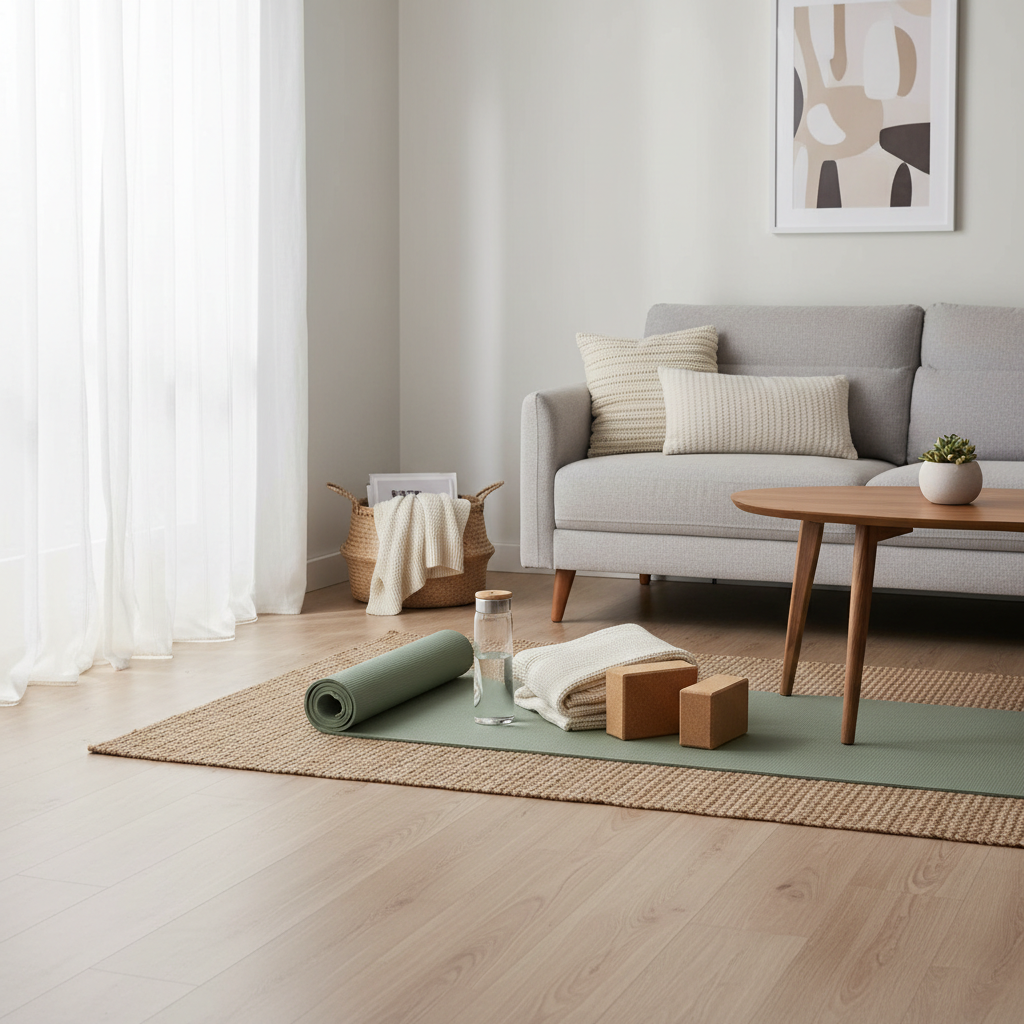
This guide stays practical: why yoga can feel calming, how to choose poses based on your stress pattern, a few short routines, and the common mistakes that make people think yoga “doesn’t work” for them.
Why yoga can calm stress (and why it sometimes doesn’t)
Stress is not just a thought problem, it shows up as muscle guarding, shallow breathing, restless attention, and sleep that never feels deep. Yoga addresses those levers directly, especially when you slow down enough to notice what your body keeps bracing against.
According to the National Center for Complementary and Integrative Health (NCCIH), yoga may help support stress management and overall well-being, though results vary by person and style of practice. In real life, the “style” part matters a lot.
- Breath pace changes the signal: slower exhales often cue a calmer state, while fast breathing can keep you activated.
- Gentle pressure and long holds can feel reassuring to the body, especially for people who carry stress in hips, low back, shoulders.
- Attention training is the hidden win, you practice returning to one thing (breath, sensation), which can reduce rumination over time.
Why it sometimes fails: people pick a power flow when they need down-regulation, push into stretches to “fix” tightness, or skip the breathing and then wonder why stress stays high. For stress relief yoga, the intensity is usually the first dial to turn down.
Quick self-check: what kind of stress day are you having?
Before you choose a sequence, take 30 seconds. This keeps you from doing the exact opposite of what your nervous system needs.
- “Wired and tired”: you feel exhausted but your mind keeps racing, sleep feels elusive.
- Body bracing: shoulders up, jaw tight, shallow chest breathing, headache creeping in.
- Emotionally flooded: irritability, tears close to the surface, hard to focus.
- Shutdown: numb, heavy, unmotivated, you want to scroll and disappear.
If you recognize the first three, you’ll usually do well with slow, grounding shapes, longer exhales, and supported holds. If you recognize shutdown, you may still choose gentle yoga, but with slightly more movement and light heat-building so you don’t feel stuck.
Best yoga poses for stress relief (with real-world cues)
You don’t need 20 poses. A small menu you trust often beats variety, because your body starts associating these shapes with safety and release.
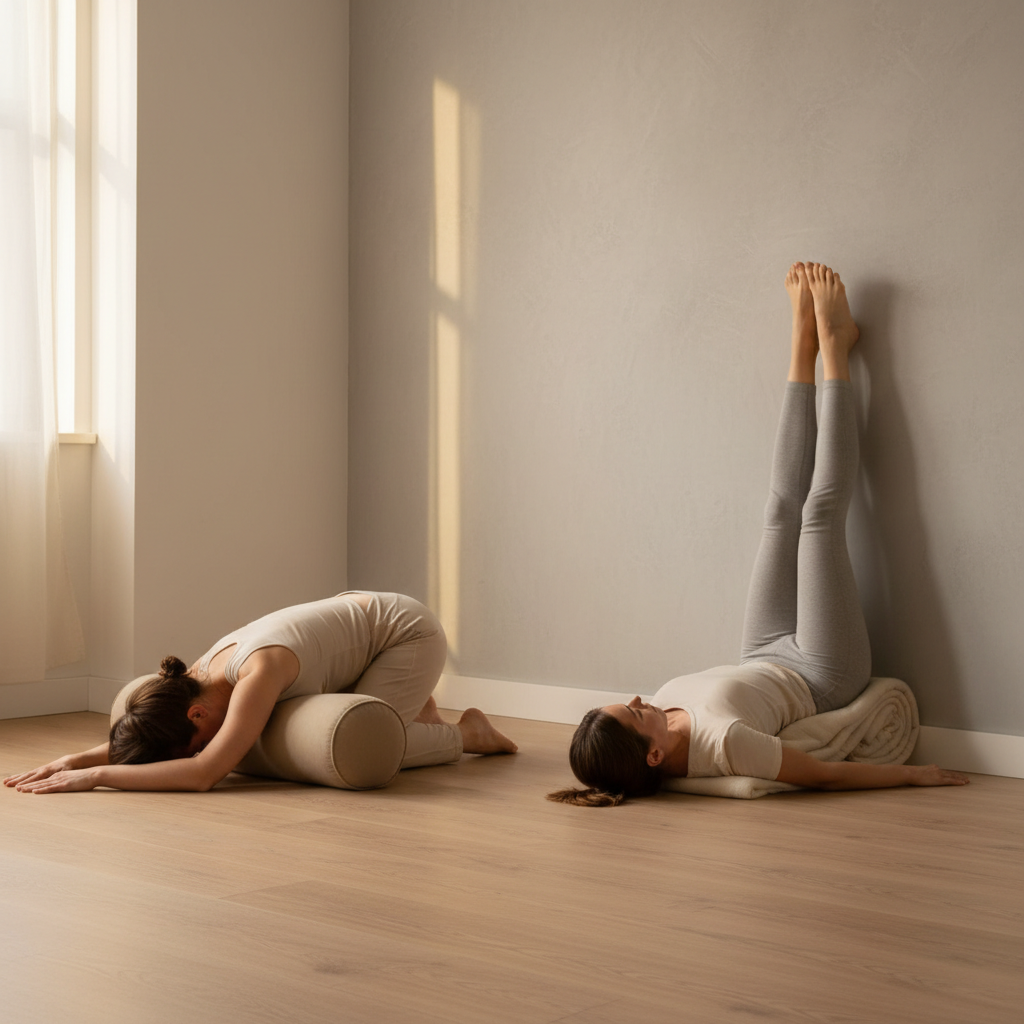
- Child’s Pose (Balasana): widen knees if low back feels compressed, rest forehead on hands or a block for a “settling” effect.
- Cat-Cow: move slowly, match movement to breath, keep jaw unclenched. This is great when stress lives in spine and ribs.
- Standing Forward Fold (Uttanasana): bend knees a lot, let arms hang, sway gently. If dizzy, come out slowly and shorten the hold.
- Legs Up the Wall (Viparita Karani): use a folded blanket under hips, keep knees slightly bent if hamstrings tug. Many people like this before bed.
- Reclined Twist: keep both shoulders heavy, use a pillow between knees if low back feels cranky.
- Supported Bridge: place a block under sacrum, not the low back, and let the front body soften without “holding” the pose.
One honest tip: if you’re forcing the stretch, you’re probably feeding the stress response. Aim for a sensation level around 5–6 out of 10, where you can still breathe smoothly and your face stays soft.
Breathing and pacing: the part most people rush
Breathing is not a side quest, it’s the steering wheel. If you do the poses but keep breathing like you’re late for a meeting, the nervous system often stays on alert.
A simple 3-minute breath pattern
- Inhale through the nose for 4 counts.
- Exhale through the nose for 6 counts, keep it unforced.
- If 4/6 feels too long, try 3/4. Comfort beats math.
According to the American Heart Association, stress management practices can support heart health as part of an overall lifestyle approach. Breathing-based relaxation is often used because it’s low-cost and accessible, but if you have respiratory or cardiac conditions, it’s sensible to check with a clinician before doing long breath holds or advanced techniques.
3 short routines (choose by time and mood)
These are designed for “I can do this even on a rough day.” Use a folded blanket, pillow, or yoga blocks if you have them, comfort helps the body let go.
10-minute downshift (evening, wired mind)
- Child’s Pose, 1–2 minutes
- Cat-Cow, 1 minute
- Seated Forward Fold (bent knees), 1 minute
- Legs Up the Wall, 3–5 minutes
- Reclined Twist, 1 minute each side
15-minute shoulder-and-neck reset (desk stress)
- Easy Seat breathing, 1 minute with longer exhales
- Thread the Needle, 1 minute each side
- Supported Puppy Pose (use a pillow), 1–2 minutes
- Standing Forward Fold (knees bent), 1–2 minutes
- Supported Bridge, 2–3 minutes
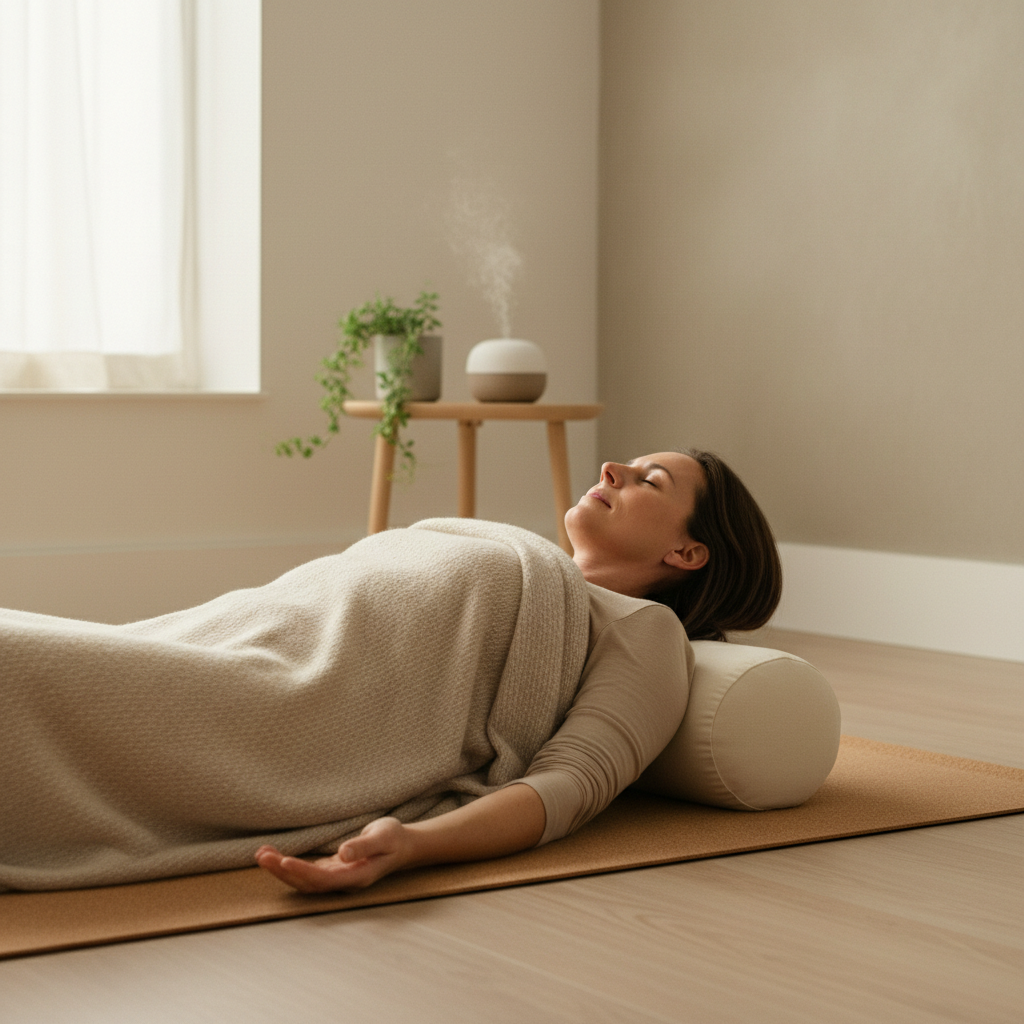
- Savasana, 2 minutes
12-minute gentle lift (shutdown, low mood)
- Cat-Cow, 1 minute
- Low Lunge with hands on blocks, 1 minute each side
- Mountain Pose to Forward Fold, slow flow for 2 minutes
- Bridge Pose (active), 6–8 slow reps
- Legs Up the Wall, 2–3 minutes
What to do each week: a realistic plan that sticks
The most effective stress relief yoga plan usually looks boring on paper, because it repeats. That repetition is the point, it teaches your body the pathway.
- 2–3 short sessions (10–20 minutes) on weekdays, choose one routine above.
- 1 longer session (30–45 minutes) on a weekend day, slower class or restorative sequence.
- Micro-practice on “no time” days: 6 long exhales while standing, then one forward fold with bent knees.
If you track anything, track the simplest outcome: how long it takes you to feel your shoulders drop or your breathing deepen. That’s a real signal, even if life stays stressful.
Pose selection cheat sheet (table)
Use this as a quick filter when you’re not sure what to do, especially when you only have a few minutes.
| How you feel | What to emphasize | Good choices | What to skip (often) |
|---|---|---|---|
| Racing mind, insomnia | Long exhales, supported holds | Legs Up the Wall, Child’s Pose, reclined twist | Hot power flow, fast vinyasa |
| Tight neck/shoulders | Gentle chest opening, slow mobility | Thread the Needle, supported puppy, forward fold | Aggressive backbends |
| Emotionally flooded | Grounding, steady rhythm | Cat-Cow, low lunge (supported), Savasana | Long, intense hip stretches if they spike emotion |
| Shutdown, low energy | Light movement, gentle strength | Slow flows, bridge reps, standing shapes | Only passive resting for long periods |
Common mistakes and safety notes (especially for beginners)
Yoga looks gentle, but stress makes people push in sneaky ways, usually because they want results fast. A few guardrails keep it helpful.
- Stretching to “win”: if you grimace, hold your breath, or feel tingling, back off and add support.
- Ignoring pain signals: sharp pain, numbness, or joint pain is not the kind of discomfort you breathe through.
- Holding advanced breathing: long breath holds can feel intense, skip if you feel lightheaded or anxious.
- Overloading evenings: late-night power classes can keep some people awake, even if they feel “good tired.”
If you’re pregnant, recovering from injury, managing high blood pressure, glaucoma, or other medical conditions, pose choices may need adjustment. In those cases, it’s reasonable to consult a qualified yoga teacher and, when appropriate, a healthcare professional.
Key takeaways you can use today
- Stress relief yoga is more about downshifting your system than chasing flexibility.
- Pick poses that match your stress pattern, wired needs different inputs than shutdown.
- Longer exhales and supported holds often deliver the “ahh” feeling people expect from yoga.
- Consistency beats novelty, repeat a short routine several times per week.
Conclusion: keep it simple, repeat what works
If you want stress relief yoga to actually help, choose a short routine, slow the breathing, and make it easy enough that you’ll do it on an average Tuesday. The calm feeling often shows up gradually, then one day you notice you recovered faster after a rough moment.
Tonight, try the 10-minute downshift once, then repeat it three times this week. If your body responds, you’ve found your baseline practice, and that’s a solid place to build from.
FAQ
How often should I do stress relief yoga to notice a difference?
Many people do best with 10–20 minutes, 2–4 times per week. If you’re very stressed, shorter daily sessions can feel more doable than one long class.
Is restorative yoga better than vinyasa for relaxation?
Often, yes, restorative tends to be more calming because it uses support and longer holds. But some people relax more after gentle movement, so a slow flow can work too.
What if yoga makes me emotional or teary?
That can happen, especially with longer holds and hip openers. If it feels overwhelming, shorten the hold, add support, or choose simpler shapes like child’s pose and easy twists.
Can I do stress relief yoga right before bed?
Usually, gentle and supported practices fit well before sleep. If you notice you feel more alert afterward, move it earlier in the evening and keep the pace slower.
What are the best poses when anxiety feels physical in my chest?
Try supported chest opening without strain, plus longer exhales. Supported puppy pose or a gentle supported bridge can help, as long as breathing stays smooth.
Do I need a yoga class, or can I do this at home?
Home works well for many people because it’s easier to keep it quiet and uncompetitive. If you’re unsure about alignment or have an injury history, a few sessions with a qualified teacher may save you frustration.
When should I seek professional help for stress instead of relying on yoga?
If stress affects sleep for weeks, triggers panic symptoms, or interferes with work and relationships, it’s a good idea to talk with a licensed mental health professional. Yoga can be supportive, but it’s not a substitute for care when symptoms escalate.
If you’re trying to build a steady routine and want something more structured than “random poses,” a simple weekly plan with a few repeatable sequences and clear modifications can make home practice feel less guessy and more calming.