
Agility Training works best when it stops being a bag of random ladder clips and starts looking like your sport: quick accelerations, controlled deceleration, clean cuts, and smart reactions. If you feel “fast” in a straight line but lose time (or confidence) when changing direction, you are exactly the person these drills help.
The good news is you do not need fancy gear or a perfect field. What you do need is structure: a few key movement patterns, a way to progress difficulty, and enough recovery so your joints and nervous system can actually adapt.

Below you will find a practical menu of drills that transfer well across sports, plus a quick self-check to pick the right level, a sample week, and the common mistakes that make agility work feel “hard” without making you better.
What agility really is (and what it is not)
Most athletes think agility equals fast feet. Foot speed matters, but most game-winning moves come from how you brake, re-accelerate, and re-orient your body. That is where time gets saved and injuries often get avoided.
In most field and court sports, agility usually includes three layers:
- Change of direction (COD): pre-planned cuts, same pattern each rep.
- Deceleration skill: lowering center of mass, controlling knee/hip/ankle, stopping on purpose.
- Reactive agility: responding to a cue (partner, ball, coach point, or visual call).
According to NSCA, training should match the movement demands of performance and include proper technique and progressive overload, not just fatigue. In plain English, if every rep turns sloppy, you are practicing sloppiness.
Why athletes get “stuck” with agility gains
When agility work stops improving performance, it is usually one of these issues, not a lack of effort.
- Too much low-value volume: long ladder sessions create burn, but many sports reward one or two decisive cuts, not 90 seconds of tapping.
- Skipping deceleration: athletes practice cutting fast, but not stopping well, so the body protects itself by slowing down.
- No progression: the same drill, same speed, same surface, same cues, week after week.
- Technique leakage: knees collapse inward, torso stays tall, feet land too far ahead, and forces go to joints instead of hips.
- Doing it exhausted: if agility always comes after a brutal lift or long conditioning, quality drops and adaptation follows.
If you only change one thing, change this: treat Agility Training like a skill session, not a punishment finisher.
Quick self-check: which level should you train at?
Use this quick checklist to choose starting drills and keep your risk reasonable. If anything hurts (sharp pain, instability, swelling), it is smarter to pause and consult a qualified professional.
- Beginner: you can sprint, but stopping feels jarring, knees cave in, or you lose balance when cutting.
- Intermediate: you can decelerate cleanly, but your first step after a cut feels slow or you “pop up” tall.
- Advanced: you can cut hard at game speed and stay controlled, now you need reaction, deception, and sport-specific cues.
Simple benchmark: can you do a controlled stop from a moderate run in 3–4 steps without your heels slamming and without wobbling? If not, build deceleration first.
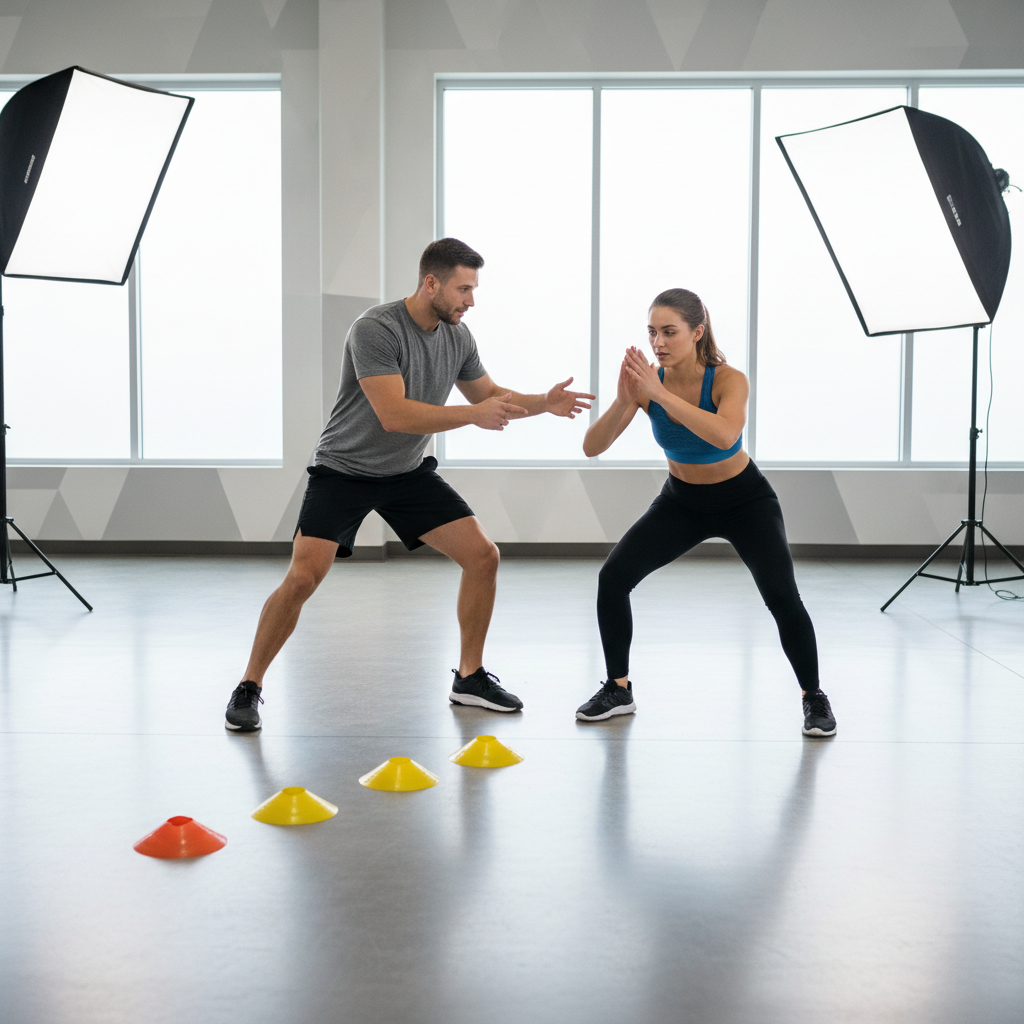
One more reality check: the best drill is the one you can repeat with sharp reps. If your form breaks at full speed, dial down speed or complexity and earn it back.
Foundational drills that transfer to almost any sport
These cover the big rocks: accelerate, brake, cut, and re-accelerate. Keep reps short and crisp, rest enough to stay fast.
1) Accel–decel repeats (10–15 yards)
- How: accelerate hard, then decelerate under control to a stop in a marked zone.
- Coaching cues: “hips back,” “quiet feet,” “nose over toes,” do not slam into your heels.
- Best for: any sport with stopping, which is most sports.
2) Pro-agility style shuttle (5–10–5 pattern)
- How: start centered, sprint 5, cut, sprint 10, cut, finish 5.
- Make it better: put a cone touch rule (hand to cone) to force lower hips.
- Best for: football, basketball, soccer, lacrosse, baseball fielding.
3) Lateral shuffle to sprint
- How: shuffle 3–5 yards, plant outside foot, explode into a 5–10 yard sprint.
- Common fix: avoid crossing feet unless your sport demands it.
4) “Box” COD (square pattern)
- How: four cones in a square, sprint forward, shuffle, backpedal, shuffle, repeat both directions.
- Why it works: changes planes and exposes weak links.
Key point: in most Agility Training sessions, 10–25 total high-quality reps beats 60 tired reps.
Reactive agility drills: where games are won
Pre-planned patterns build a base, but sport happens under uncertainty. Reactive work adds decision-making, which often drops speed at first, that is normal.
Partner point-and-go
- Setup: 3–4 cones in a semicircle, athlete in the middle.
- Action: partner points to a cone, athlete bursts, tags it, returns.
- Progression: partner fakes, or calls color/number late.
Mirror drill (1v1)
- Setup: small box area, leader moves, follower mirrors for 5–8 seconds.
- Rule: keep posture athletic, no wild reaching.
Ball bounce or drop reaction
- Setup: coach holds tennis ball, athlete ready.
- Action: coach drops or bounces, athlete reacts and catches after one bounce.
- Why: quick first step and visual reaction without overthinking.
According to CDC, injury risk tends to rise with fatigue and poor control, so reactive drills should stay short, with plenty of rest, especially when athletes are still learning to brake and cut.
A simple progression system (so drills keep working)
If you train the same pattern forever, you get good at that pattern, and then it stops carrying over. Progress one variable at a time:
- Speed: increase intensity only when you can stop and cut cleanly.
- Complexity: add an extra cut, or switch from COD to reactive cueing.
- Constraint: smaller space, target zone, or “must stop inside the box.”
- Surface and footwear: turf vs court changes grip, adapt slowly.
- Sport specificity: add ball, stick, puck, or stance that matches your position.
One practical rule: if you cannot repeat a rep within roughly the same quality and speed, you progressed too far for today.
Sample weekly plan + drill table (pick your sport, keep it simple)
This template fits many athletes who practice their sport 2–5 days per week. Adjust based on season, workload, and recovery. If you have a prior knee/ankle/hip issue, consider checking in with a physical therapist or qualified coach before pushing intensity.
| Day | Goal | Drills | Sets x Reps | Rest |
|---|---|---|---|---|
| Day 1 | Decel + COD quality | Accel–decel repeats, 5–10–5 shuttle | 3x4 each | 60–120s |
| Day 2 | Reactive speed | Partner point-and-go, mirror drill | 4x4 cues, 6–8 rounds | 60–90s |
| Day 3 | Integration | Shuffle-to-sprint, box COD, sport skill combo | 3x3 each | 60–120s |
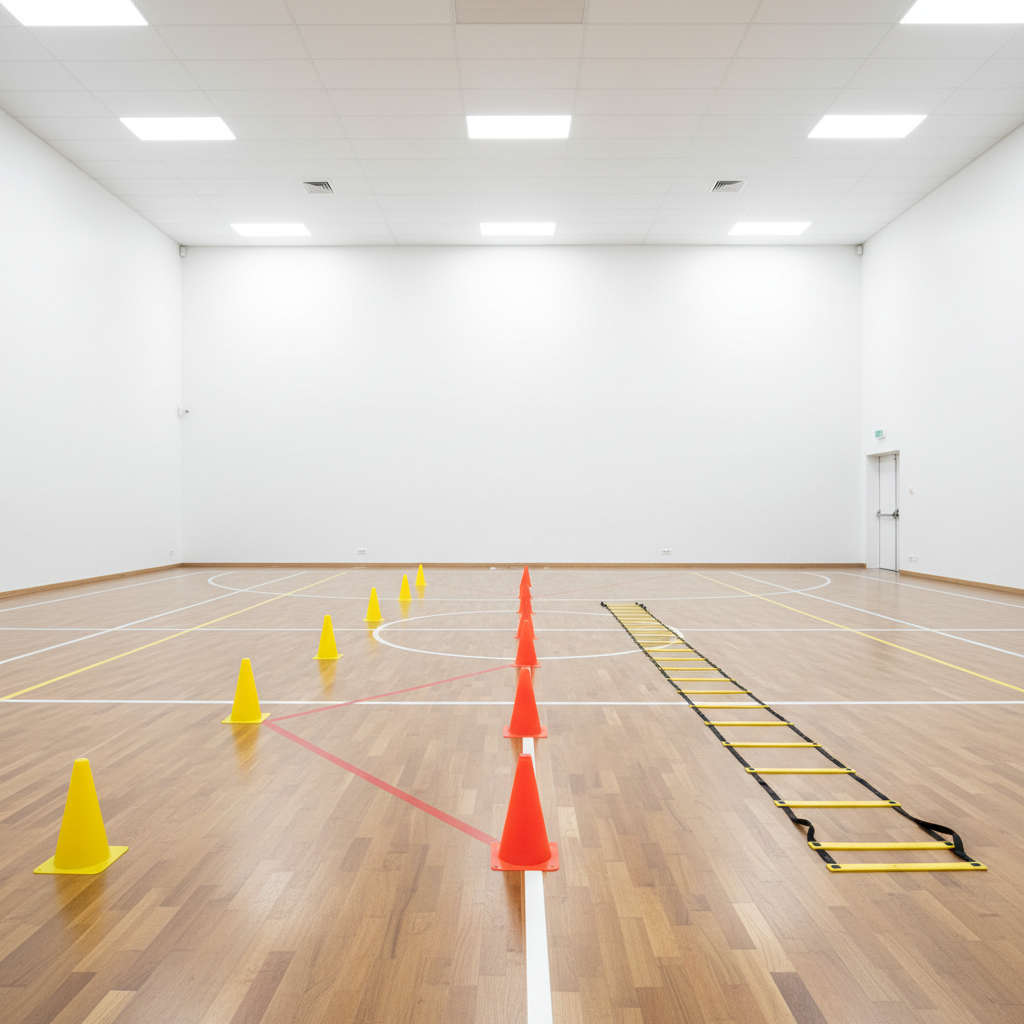
Practical placement: many athletes do Agility Training right after a warm-up and before heavy lifting or conditioning, when coordination is highest.
Common mistakes and safety notes (the stuff that quietly ruins progress)
- Turning every rep into a max test: save all-out efforts for a few top-quality reps, not the entire session.
- Standing too tall on cuts: high hips usually mean slow cuts and cranky knees.
- Chasing “fast feet” over strong positions: ladder work can help rhythm, but it rarely fixes poor braking mechanics.
- Ignoring asymmetry: if one side always feels weaker, reduce speed and own the positions, then rebuild intensity.
- No warm-up: a few minutes of movement prep and gradual buildups often make the session feel smoother.
If you feel joint pain (not normal muscle fatigue), repeated giving-way, or lingering swelling, that is a sign to back off and consider medical guidance. Better agility is not worth gambling with a knee or ankle.
Key takeaways you can use today
- Agility Training is mostly about braking and re-accelerating, not just quick steps.
- Keep reps short, rest enough, and stop before form falls apart.
- Build from COD to reactive work, then layer in sport tools and cues.
- Progress one variable at a time, speed is earned.
If you want a clean next step, pick two foundational drills and one reactive drill, run them twice a week for three weeks, and track whether your cuts feel more controlled at game pace.
FAQ
How often should I do Agility Training each week?
For many athletes, 2 sessions per week works well in-season, and 2–3 sessions can fit off-season if total workload stays reasonable. If practices already include lots of cutting, keep dedicated sessions shorter.
Are agility ladders worth it?
They can help coordination and rhythm, especially for beginners, but they rarely build strong deceleration and cutting mechanics by themselves. If time is limited, cones and stopping drills usually give more transfer.
What is the difference between change-of-direction and reactive agility?
Change-of-direction is pre-planned, you know the pattern. Reactive agility adds a cue and a decision, which looks more like sport. Most athletes need both, in that order.
Can I do agility work if I have knee pain?
Maybe, but it depends on what triggers the pain and your history. Often the safer move is to reduce intensity, prioritize deceleration technique, and consult a physical therapist or sports medicine professional if pain persists.
How long should an agility session be?
Quality sessions often run 20–40 minutes including warm-up, because speed and coordination fade when athletes push too long. If you need more conditioning, do it separately.
Should I train agility before or after lifting?
Many coaches place it early, after a warm-up, so you can move fast and clean. If your main goal is strength that day, you can still do a small agility dose first and keep lifting as the priority.
What shoes and surfaces are best for agility drills?
Use what matches your sport when possible, but introduce high-traction surfaces carefully. Too much grip, too soon, sometimes irritates knees or ankles, especially when mechanics are still developing.
If you are building a plan for a team, a busy adult league schedule, or a specific return-to-sport situation, it can be easier to get a coach to watch a few cuts and clean up technique, small fixes often change how safe and effective your Agility Training feels.