
How to pack a cycling jacket small comes down to two things most riders overlook: picking the right fold for the fabric, and choosing a spot that won’t turn your pocket into a brick.
If you commute, ride gravel, or just get caught in surprise weather, a packable jacket is supposed to feel “there if I need it,” not “why did I bring this.” When it packs poorly, you fidget all ride, your jersey sags, and the jacket comes out looking like a crumpled napkin.
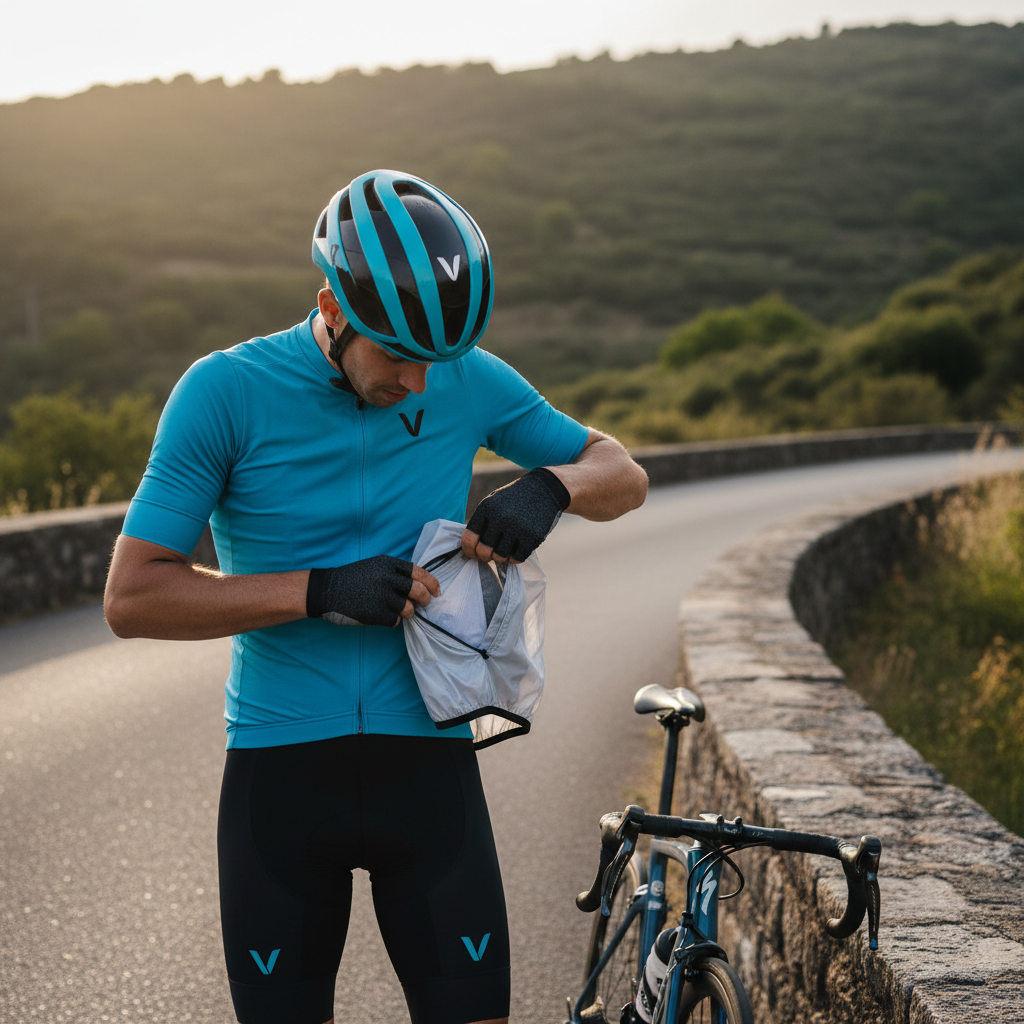
This guide focuses on the practical part: fast folds you can do with cold hands, what to avoid so zippers don’t punch holes, and a quick decision chart so you pick the right method for your jacket type.
Know what “pack small” really means for cycling jackets
Not every cycling shell is meant to disappear into a pocket. Some are “stowable” for emergencies, others are “packable” by design, and a few are basically full-on rain jackets with cycling fit.
According to REI, fabric choice and construction (like seam taping and heavier face fabrics) can change how compact a rain layer can get and how it feels when stuffed for travel. In cycling terms, that usually translates to: the more weather protection you buy, the less pocket-friendly it becomes.
- Ultralight wind jackets: pack smallest, easiest to stuff, often less durable.
- Light rain shells: still packable, but bulkier due to coatings, membranes, zippers.
- Insulated or softshell jackets: rarely “small,” better on-body than in-pocket.
So your goal is realistic: get it compact enough to carry without bouncing, and protected enough that the jacket survives repeated packing.
A quick self-check: which packing method should you use?
Before you start folding, do a 15-second check. It prevents the classic mistake of trying to “origami” a jacket that is better off being gently stuffed.
- Does it have its own stuff pocket/sack? Use that first, it’s sized for the garment.
- Is the fabric crinkly and thin (wind shell)? Stuffing works well and stays small.
- Is it a 2.5L/3L rain membrane shell? Fold to protect the membrane and avoid sharp creases.
- Does it have a stiff brimmed hood or bulky collar? Fold method matters more, or it will form a lump.
- Are there sharp hardware points (chunky zipper pull, Velcro tabs)? Cover them inside the fold to reduce abrasion.
Three reliable ways to pack a cycling jacket small (with steps)
Use whichever matches your jacket and where you plan to carry it. If you ride in changeable conditions, it’s worth practicing once at home so you can do it in 20 seconds on the roadside.
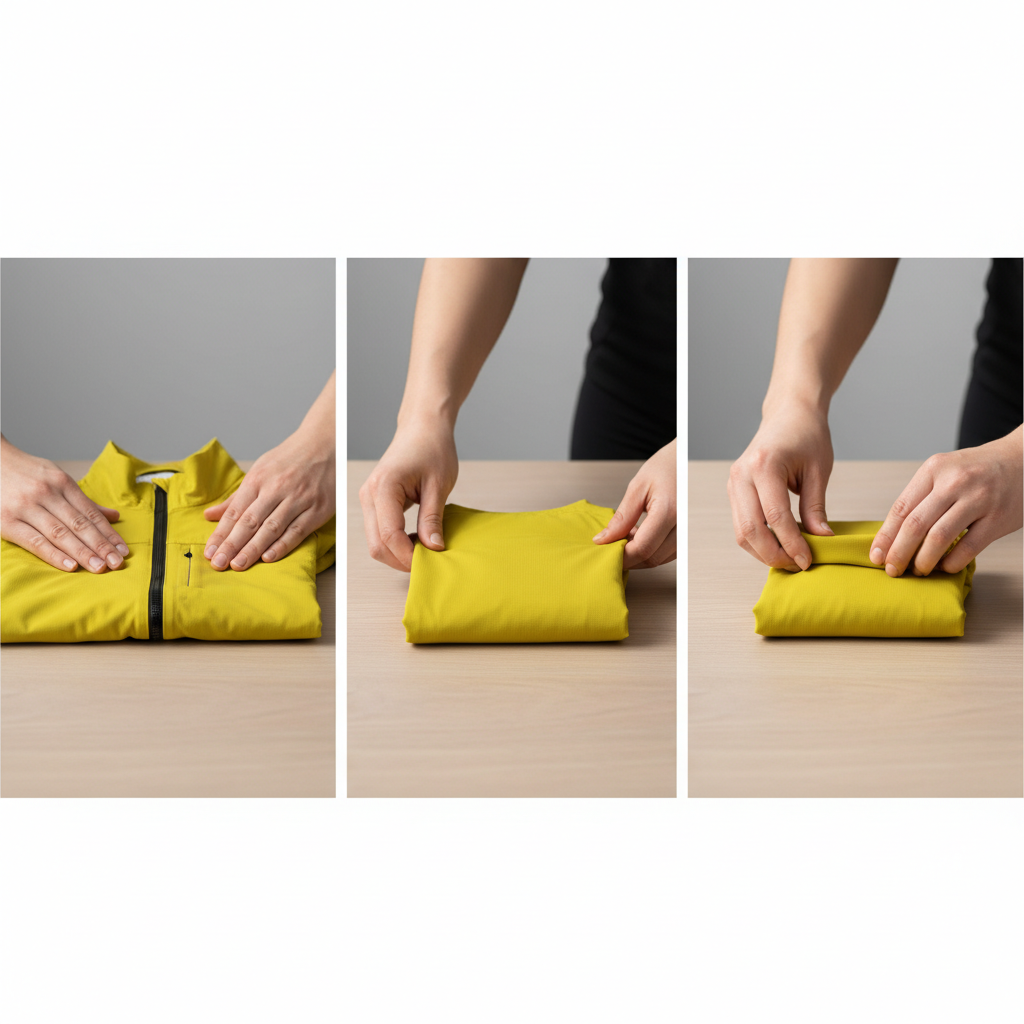
Method 1: The “pocket burrito” fold (best for jersey pockets)
This is the cleanest way to keep the bundle flat, which matters more than tiny when it sits against your back.
- Zip the jacket about 80–90% to keep shape, leave a small gap at top so air escapes.
- Lay it face down, smooth the arms inward across the back.
- Fold the sides toward the center to create a long rectangle roughly pocket-width.
- Start from the hem, roll upward firmly, pressing air out as you go.
- Tuck the hood (or collar) around the roll to “lock” it, then slide into the middle jersey pocket.
Why it works: it stays flatter than a ball, so it bounces less and doesn’t push other items out.
Method 2: The “gentle stuff” (best for ultralight wind shells)
If the jacket is designed to pack down, stuffing can actually be kinder than hard creasing.
- Zip fully, close any Velcro so it doesn’t catch fabric.
- Grab from the shoulders and push the jacket into its own pocket or a small sack.
- Use your palms to compress evenly, avoid twisting the fabric into a tight rope.
- Place it in a bar bag/top-tube bag or an outer pocket of a hydration pack.
Small tip: if your jacket has a silicone gripper at hem, don’t let it become the “outer edge” that rubs, tuck it inward.
Method 3: The “membrane-safe fold” (best for rain shells)
For shells with waterproof-breathable laminates, sharp folds in the same place every ride can cause premature wear in a few common stress zones. You can’t eliminate creases, but you can spread them out.
- Zip fully, turn the jacket inside-out so the face fabric protects the membrane.
- Fold sleeves across the back, then fold into thirds (like folding a letter).
- Fold once more to match your carry spot size, then stop.
- Secure with a soft band (like a small elastic strap) rather than cinching hard.
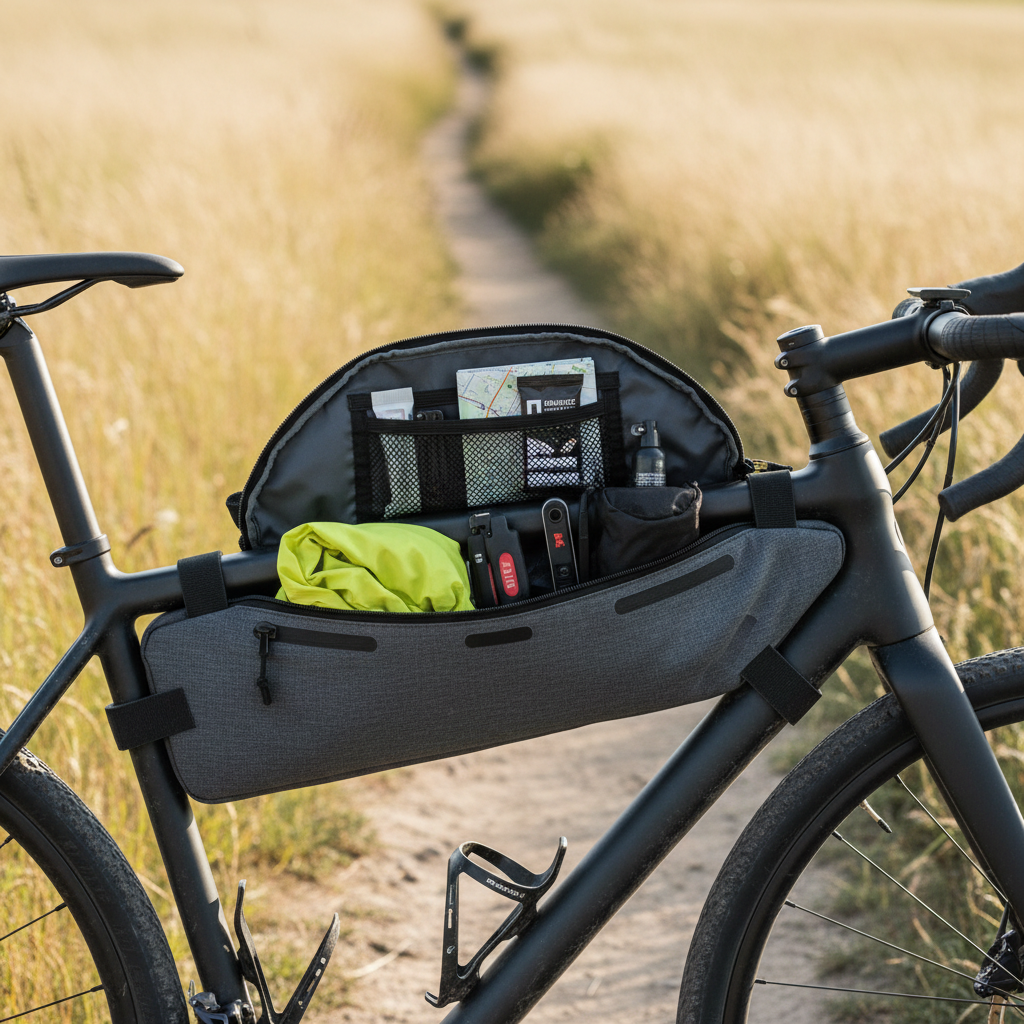
Carry note: rain shells often feel bulky in a jersey pocket, a small saddle bag or frame bag tends to ride better.
Where to store it on the bike so it feels smaller
Even after you pack a cycling jacket small, it can still feel annoying if you put it in the wrong place. “Small” on a scale is different from “comfortable” at 20 mph.
- Middle jersey pocket: best for flat rolls, keeps weight centered, easiest access.
- Side jersey pocket: okay for tiny bundles, but can tug the jersey sideways.
- Bar bag: great for rain shells, also keeps sweat off the jacket.
- Top-tube bag: convenient, but only if the bundle is truly compact.
- Hydration pack: most forgiving, especially for bulky collars and hoods.
If you feel the bundle thumping, it’s usually not because it’s too big, it’s because it’s too round. Re-pack flatter.
Use this table to pick the best method fast
If you’re trying to decide in a store, or you own multiple layers, this quick comparison is usually enough.
| Jacket type | Best packing method | Best carry spot | What to watch for |
|---|---|---|---|
| Ultralight wind jacket | Gentle stuff | Jersey pocket / top-tube bag | Snags from Velcro, zipper pull abrasion |
| Packable rain shell (2.5L) | Membrane-safe fold | Bar bag / hydration pack | Repeated sharp creases in same spots |
| 3-layer rain shell | Membrane-safe fold (looser) | Bar bag / saddle bag | Bulk and stiffness, avoid over-compressing |
| Light insulated jacket | Pocket burrito (if possible) | Hydration pack | Loft loss if compressed for long periods |
Common mistakes that keep your jacket from packing down
A lot of “my jacket won’t pack small” complaints are really packing habits that create extra bulk.
- Trapping air inside: partially zip, press air out as you roll, then finish.
- Letting the hood dictate the shape: tuck it as the outer wrap, not as a lump in the middle.
- Velcro left open: it grabs fabric and forces awkward folds, plus it causes wear.
- Over-rolling stiff shells: some rain layers prefer folding, rolling makes a rigid “log.”
- Carrying with keys/tools: sharp edges can puncture thin fabrics, separate them.
Also, don’t store it compressed for days in a tight ball. Many materials recover fine, but long compression can stress coatings and insulation. If you’re unsure about your specific fabric, the brand’s care page is usually the safest reference.
On-ride packing tips when hands are cold or it’s raining
This is where theory meets reality. When you stop in wind or drizzle, you want a method that works fast and doesn’t require a perfect flat surface.
- Use your thigh as the “table”: fold sleeves in while the jacket hangs, then roll against your leg.
- Pack it slightly damp, but isolate it: put it in a separate pocket or a small plastic bag so it doesn’t soak your phone or food.
- Prioritize access over maximum compression: in changeable weather, a slightly larger but quick-to-deploy pack often wins.
- Re-pack after 5 minutes: once you warm up, you can compress better without rushing.
If you’re shivering, focus on getting moving again. A “good enough” pack that keeps you safe beats a perfect fold.
Key takeaways and a simple next step
If you want to pack a cycling jacket small without fighting it every ride, match the method to the material, aim for a flatter bundle, and store it where it won’t bounce. The fastest win for most riders is learning one fold for jersey pockets and one fold for rain shells, then sticking with them.
Next step: take your jacket right now, time yourself doing the pocket burrito fold twice, and see if it sits comfortably in your middle jersey pocket with your usual ride kit, that small check saves a lot of mid-ride annoyance.
FAQ
How do I pack a cycling jacket small enough for a jersey pocket?
Use a flat roll like the pocket burrito method, press air out as you roll, and keep the hood wrapping the outside so it doesn’t form a lump. If it still feels bulky, your jacket may be more “stowable” than truly packable.
Is it better to fold or stuff a cycling jacket?
Wind shells usually do well with gentle stuffing, while waterproof membrane shells often prefer folding to avoid hard creases in the same spot. If the jacket has a built-in stuff pocket, that’s typically the intended approach.
Can repeated packing damage a waterproof cycling jacket?
It can contribute to wear over time, especially if you create sharp creases repeatedly or grind a zipper pull into the fabric. Folding inside-out and varying fold lines can reduce stress, but if you notice delamination or flaking, consider contacting the manufacturer or a repair shop.
Why does my packed jacket bounce in my jersey pocket?
Bounce usually comes from a round, dense bundle sitting high in the pocket. Re-pack it flatter, place it in the center pocket, and avoid stacking heavy items behind it.
How do I pack a jacket when it’s wet after rain?
If possible, shake it out and do a quick fold, then isolate it from electronics and food using a separate pocket or a small bag. Once you’re home, dry it fully per the care label.
Should I keep my jacket compressed in its stuff sack between rides?
For short periods it’s often fine, but long storage compressed is not ideal for many fabrics and any insulation. Hanging it or storing it loosely is a safer default if you have the space.
What size stuff sack do I need for a cycling jacket?
It depends on the jacket, but many packable wind layers fit in very small sacks while rain shells need more room. If you’re buying one, bring the jacket and test a gentle stuff without forcing it.
If you’re trying to pack a cycling jacket small for daily rides and it still feels bulky, it may help to choose a model designed for stowing, plus a carry spot that matches your riding style, like a small bar bag for rain shells or a flatter jersey-pocket roll for wind layers.