
Gym bag essentials are the small, practical items that keep a workout from turning into an annoying scramble, no towel, dead earbuds, no clean socks, or a water bottle you forgot on the counter.
If you’ve ever shown up motivated and still left early because something basic was missing, you already get why this matters. A well-packed bag saves time, reduces stress, and makes it easier to stay consistent, especially on busy workdays.
This guide breaks down what to pack by workout type, what can live in your bag full-time, and what should rotate in and out. You’ll also get a quick table, a grab-and-go checklist, and a few “don’t bother” items that usually add bulk without helping.
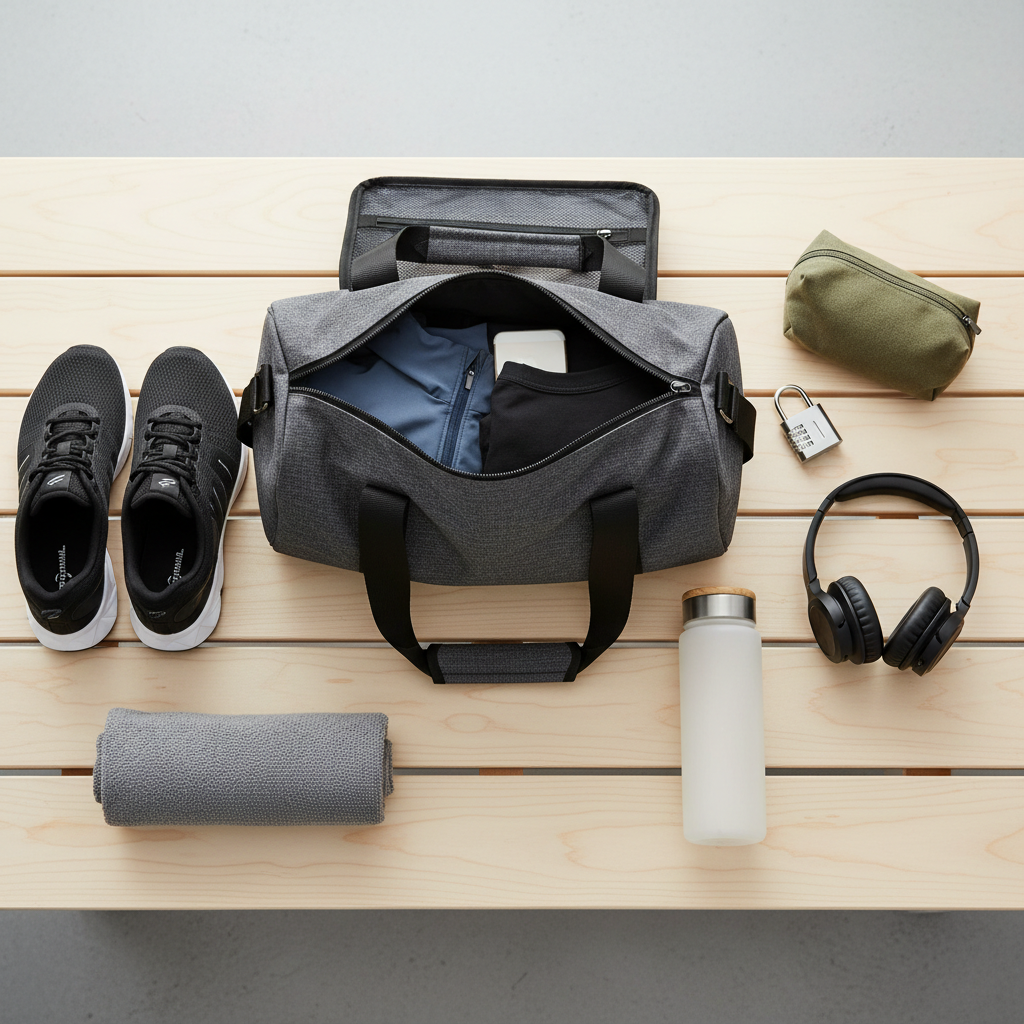
Start with the “non-negotiables” that fit almost any workout
If your goal is a bag that works for most days, pack a small core kit and stop reinventing the wheel. These gym bag essentials cover comfort, hygiene, and basic performance without turning your bag into a suitcase.
- Workout clothes (1 full set): top, bottoms, underwear, socks. Even if you “never forget,” this is the item that bails you out.
- Water bottle: a leak-proof bottle beats buying plastic bottles or relying on fountains.
- Towel: check your gym policy, many gyms expect you to bring one for benches and machines.
- Headphones + backup option: wireless earbuds plus a small charging case, or a wired backup if you’re picky.
- Deodorant: travel size is enough, avoid overpowering body spray in shared spaces.
- Hair ties/headband (if relevant): easy to forget, annoying when missing.
- Phone essentials: charger cable, a small power bank if you commute or train long.
- Small first-aid basics: a couple bandages, blister care, and a few alcohol wipes.
According to CDC guidance on hygiene and illness prevention, handwashing and cleaning high-touch surfaces can help reduce the spread of germs, in a gym context that usually means carrying wipes or sanitizer and being realistic about what you touch between sets.
Pack by workout style: lifting, cardio, classes, swimming
Here’s the honest part: “one perfect bag” is usually a myth. Most people do better with a core kit plus a few add-ons that match the day’s training.
For strength training and lifting
- Training shoes: stable sole helps with squats and deadlifts, some prefer flat shoes for heavy lower-body days.
- Straps, wraps, or belt (if you use them): bring what you already know how to use, not what you think you “should” use.
- Chalk alternative: liquid chalk can be less messy if your gym allows it.
- Notebook or training app plan: reduces wandering and “what now?” time.
For cardio days
- Extra shirt: sweaty fabric gets uncomfortable fast, and it’s a common reason people skip the cooldown.
- Sweat towel + face wipes: especially if you wear contacts or hate sweat drip.
- Reflective gear (if you run outside): small vest or bands, season-dependent.
For group fitness or yoga
- Grip socks (Pilates/barre) or a towel for hot yoga.
- Light layer: studios can feel chilly before class starts.
- Mat strap or mat bag: if you bring your own mat, this keeps it from collecting dirt.
For swimming
- Swimsuit + cap + goggles: pack them together in a mesh pouch so they dry faster.
- Flip-flops: helpful for locker rooms and pool decks.
- Wet bag: keeps damp gear from soaking everything else.
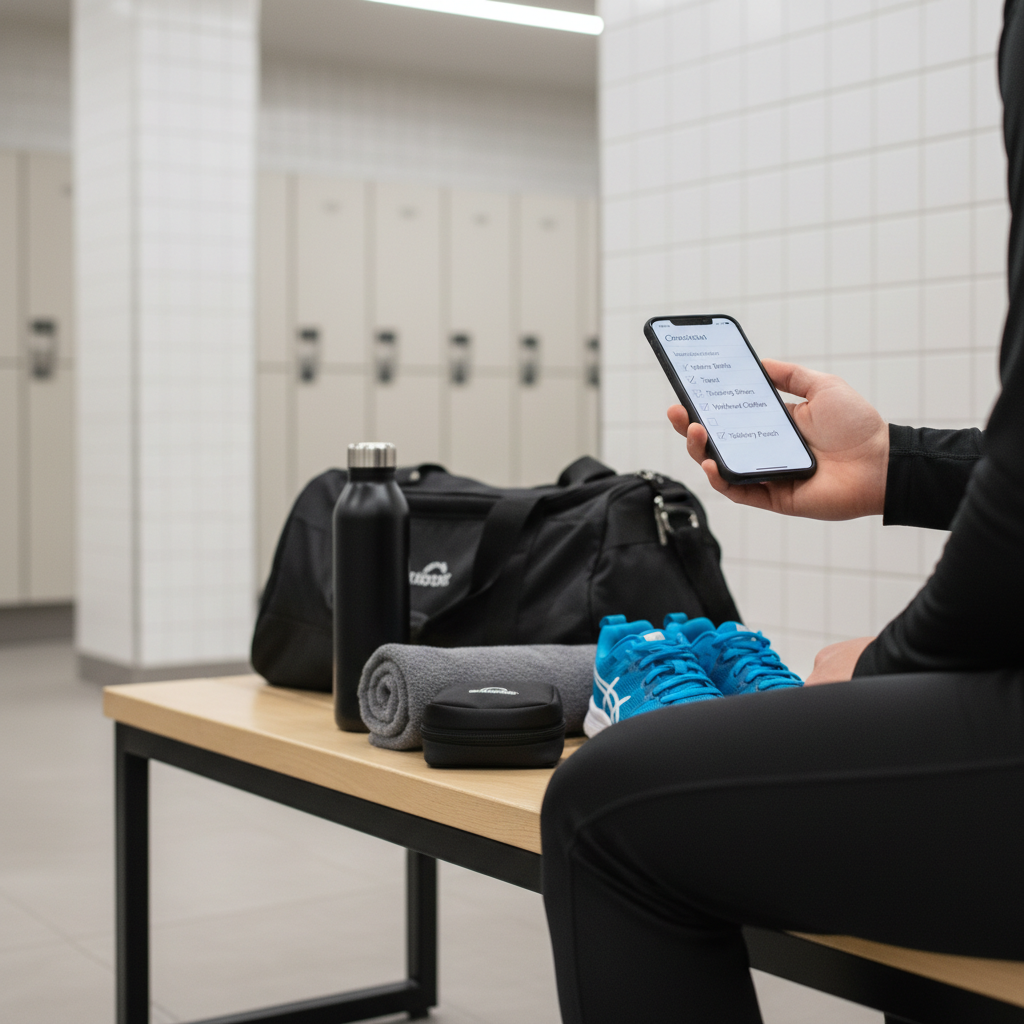
A simple table: what can stay in your bag vs what should rotate
This is where most gym bags get better overnight. Keep “always” items stocked, rotate “sometimes” items based on the session.
| Category | Keep in bag (always) | Rotate in/out |
|---|---|---|
| Hygiene | Deodorant, wipes/sanitizer, small towel | Shampoo, conditioner, razor, full shower kit |
| Clothing | Spare socks, spare underwear | Full outfit, jacket, swimwear |
| Training gear | Resistance mini-band, lock | Belt, straps, wraps, yoga props |
| Tech | Charging cable, earbud case | Power bank, heart-rate strap |
| Food | Electrolyte packets (optional) | Protein snack, pre-workout (if you use it) |
A quick self-check: which “forgotten item” keeps breaking your routine?
If you want gym bag essentials that actually stick, build your list around the thing that makes you leave early. This short checklist helps you spot your personal friction point.
- You skip workouts because of time: keep a full spare outfit plus travel deodorant and wipes in the bag.
- You avoid the gym after work: add a snack, a charger, and a clean shirt to feel human after training.
- You hate locker rooms: pack flip-flops, a small shower kit, and a wet bag so you can move fast.
- You feel unprepared on the floor: bring your plan, plus any key tools you rely on (straps, belt, mini-band).
- You get headaches/cramps during longer sessions: water bottle plus electrolyte packets can help some people, if symptoms persist, consider asking a healthcare professional.
Practical packing system: make it “grab and go” in 5 minutes
The trick isn’t perfection, it’s reducing decisions. Here’s a routine that fits most schedules and makes gym bag essentials easy to maintain.
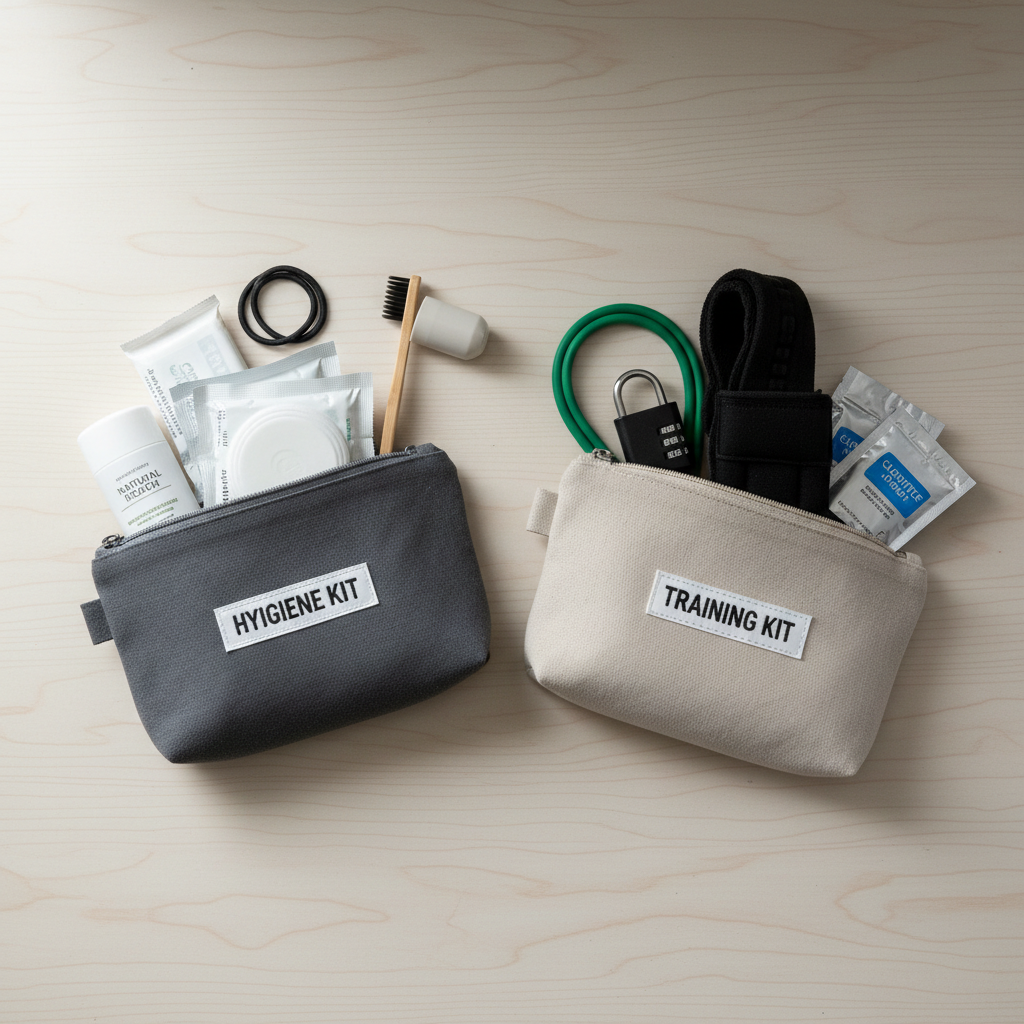
1) Build two pouches
- Hygiene pouch: deodorant, wipes, travel toothbrush, hair ties, mini lotion.
- Training pouch: lock, mini-band, straps/wraps, blister care, electrolyte packets.
Pouches stop small items from disappearing into the bag corners, and restocking becomes obvious.
2) Create a “reset” habit after each workout
- Remove sweaty clothes immediately when you get home.
- Air out the bag, unzip it for an hour if you can.
- Refill water bottle, recharge earbuds, replace towel.
It sounds basic, but this is the step people skip, and then the bag slowly turns gross or incomplete.
3) Use a one-minute checklist before you leave
- Keys, wallet, phone
- Clothes: at least socks and a clean top
- Water + headphones
- Towel + deodorant
Common mistakes that make your bag heavier, smellier, or less useful
Most people don’t need more stuff, they need fewer “random” items and a cleaner system. These are the patterns that usually cause trouble.
- Overpacking shoes: one main pair plus a sport-specific pair only if you truly use both each week.
- Keeping wet gear inside: this is how bags start smelling, fast. Use a wet bag or pull damp items out ASAP.
- Trying new supplements at the gym: if you’re experimenting with pre-workout or stimulants, start cautiously and consider professional advice if you have medical conditions.
- Relying on “borrowed” items: towels, locks, or hair ties being unavailable is a surprisingly common workout killer.
- No plan, just vibes: even a short note with 4–6 exercises keeps you moving and helps you finish on time.
When it’s worth asking for help (fit, injuries, and safety)
A gym bag can’t solve everything. If pain, dizziness, or recurring cramps show up often, it’s smarter to pause and get input.
- Persistent joint pain during lifts: a certified trainer can help with technique cues and exercise substitutions, and a clinician can rule out injury.
- Frequent lightheadedness: could be hydration, fueling, sleep, or medications, a healthcare professional can help you sort it out safely.
- Skin irritation or infections that keep returning: tighten hygiene habits, and consider medical advice if it doesn’t improve.
According to ACSM (American College of Sports Medicine), safe exercise participation depends on appropriate intensity and individual health status, if you’re unsure where to start or you’re returning after time off, professional guidance can reduce risk.
Key takeaways + a no-stress starter list
If you only change one thing, make your gym bag essentials predictable: a small core kit that lives in your bag, plus add-ons that match the day.
- Keep “always” items stocked: deodorant, wipes, charger, lock, mini-band, spare socks.
- Rotate session-specific gear: belt, swim kit, yoga towel, extra layers.
- Reset after training: remove wet clothes, air out bag, recharge and refill.
Action step: pack your core kit tonight, then set a recurring reminder to do a 60-second bag reset twice a week. Consistency usually feels a lot easier when your bag stops being the reason you skip.
FAQ
What are the most important gym bag essentials for beginners?
Start with a clean outfit, water bottle, towel, deodorant, and headphones. Beginners often overpack gear they won’t use yet, focus on showing up comfortably and consistently.
Should I keep a full extra outfit in my gym bag all the time?
Many people benefit from keeping at least spare socks and underwear in the bag, plus a basic shirt. If you commute or train after work, a full backup set can be a routine-saver.
Do I need shower supplies in my gym bag?
Only if you regularly shower at the gym. If showers are occasional, a small “quick clean” kit with wipes and deodorant often covers most situations without adding bulk.
What should I pack for the gym if I work out during lunch?
Pack a fast-change outfit, travel deodorant, face wipes, and a small grooming item you actually use. A charger and a simple snack also help when meetings run long.
How do I keep my gym bag from smelling?
Get damp clothes out quickly, air out the bag, and use a wet bag for anything sweaty. Washing the bag occasionally and wiping down the interior helps more than masking smells with spray.
What food belongs in a gym bag without going bad?
Single-serve, shelf-stable options work best: a protein bar, nuts, or electrolyte packets. For perishable foods, use an insulated pouch and replace it the same day.
Is it worth carrying lifting accessories like a belt or straps?
If you already use them and they support your training, yes. If you’re unsure, learn the basics first, and consider asking a qualified coach so you don’t rely on gear to compensate for technique.
How often should I restock my gym bag essentials?
Twice a week is a realistic cadence for most people. If you train daily, a quick post-workout reset plus a bigger weekend restock tends to work well.
If you’re trying to make workouts feel less chaotic, a simple approach is to set up a “core” gym bag kit once, then keep a short rotation list on your phone for lift days, class days, and swim days, it’s a small system, but it removes a lot of friction.