
Elbow Brace shopping is confusing because “support” can mean very different things, from light compression that simply feels good, to rigid straps that change how force travels through the tendon.
If your elbow hurts during lifting, typing, golf, or just grabbing a pan, the right brace can reduce aggravation and help you move with more confidence, but only when you match the brace style to the problem you actually have.
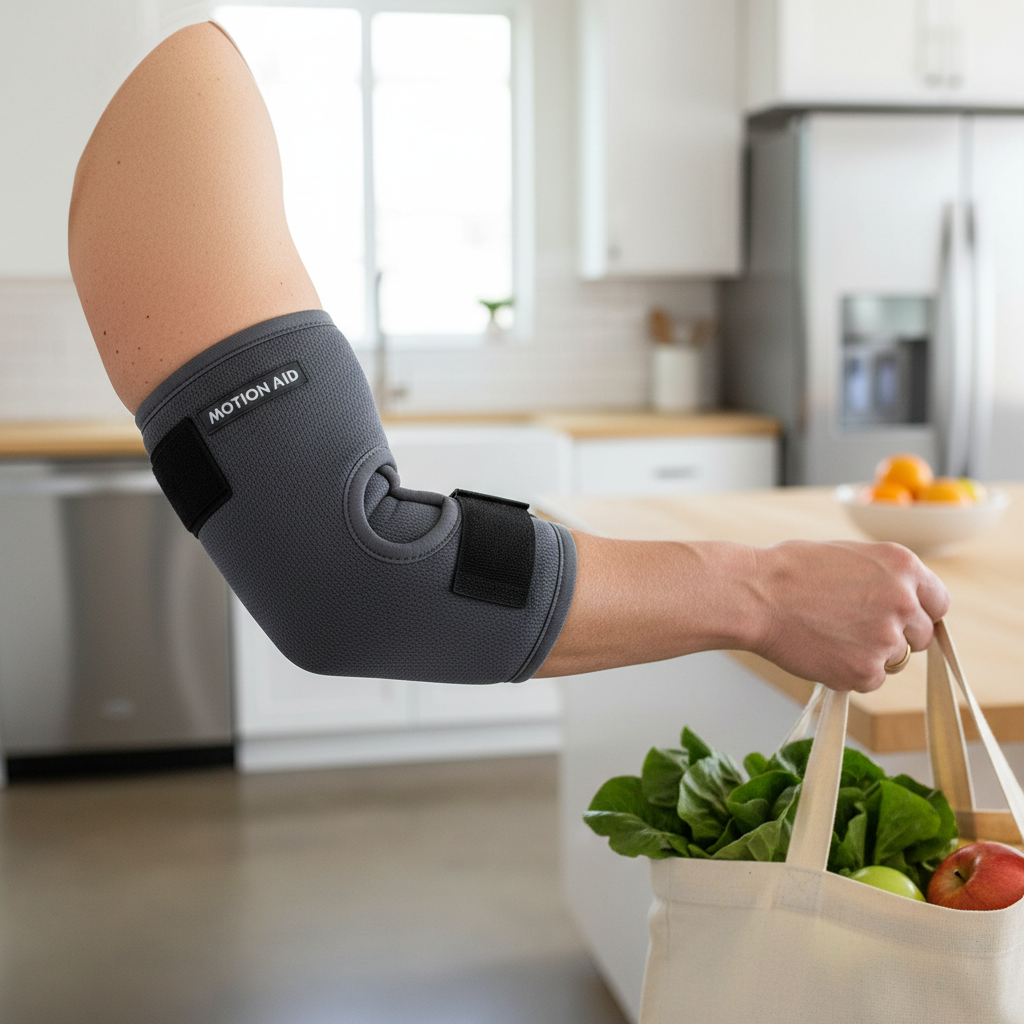
This guide walks through the most common elbow pain patterns, how to self-check what type of support you may need, and how to wear a brace without accidentally trading one irritation for another.
What an elbow brace can (and can’t) do
An elbow brace usually helps in one of three ways: it adds compression to calm mild swelling and improve “awareness” of the joint, it adds targeted pressure to unload an irritated tendon, or it adds structural support to limit motion that keeps triggering pain.
What it typically cannot do is “fix” the underlying cause by itself. If the pain comes from repetitive overload, technique issues, or nerve irritation, a brace may reduce symptoms while you also adjust training, workload, and recovery.
According to the American Academy of Orthopaedic Surgeons (AAOS)..., braces and straps are often used as part of conservative care for common elbow tendon problems, alongside activity modification and targeted rehab exercises.
Common reasons people reach for an elbow brace
Most buyers aren’t just looking for comfort, they’re trying to keep doing something: lifting, sports, manual work, or a computer-heavy job. The “why” matters, because brace choice follows it.
- Tennis elbow (lateral epicondylitis): pain on the outside of the elbow, often worse with gripping, lifting, or shaking hands.
- Golfer’s elbow (medial epicondylitis): pain on the inside of the elbow, often worse with wrist flexion, pulling, or certain curls.
- General instability or post-injury confidence: you feel “wobbly” or guarded after a sprain/strain, even if swelling is gone.
- Repetitive strain from work: long periods of mouse/keyboard use, tools, or assembly tasks that keep the forearm muscles switched on.
- Sport contact and protection: volleyball, basketball, or MMA where you want padding plus a snug feel.
A quick reality check: if pain shoots down the forearm with tingling or numbness in the fingers, you might be dealing with nerve involvement, and a random brace choice can be hit-or-miss.
Choose the right type: sleeves, straps, hinged braces
Think of elbow supports as a spectrum. Light sleeves sit on one end, hinged braces on the other, and tendon straps are the “targeted tool” in the middle.
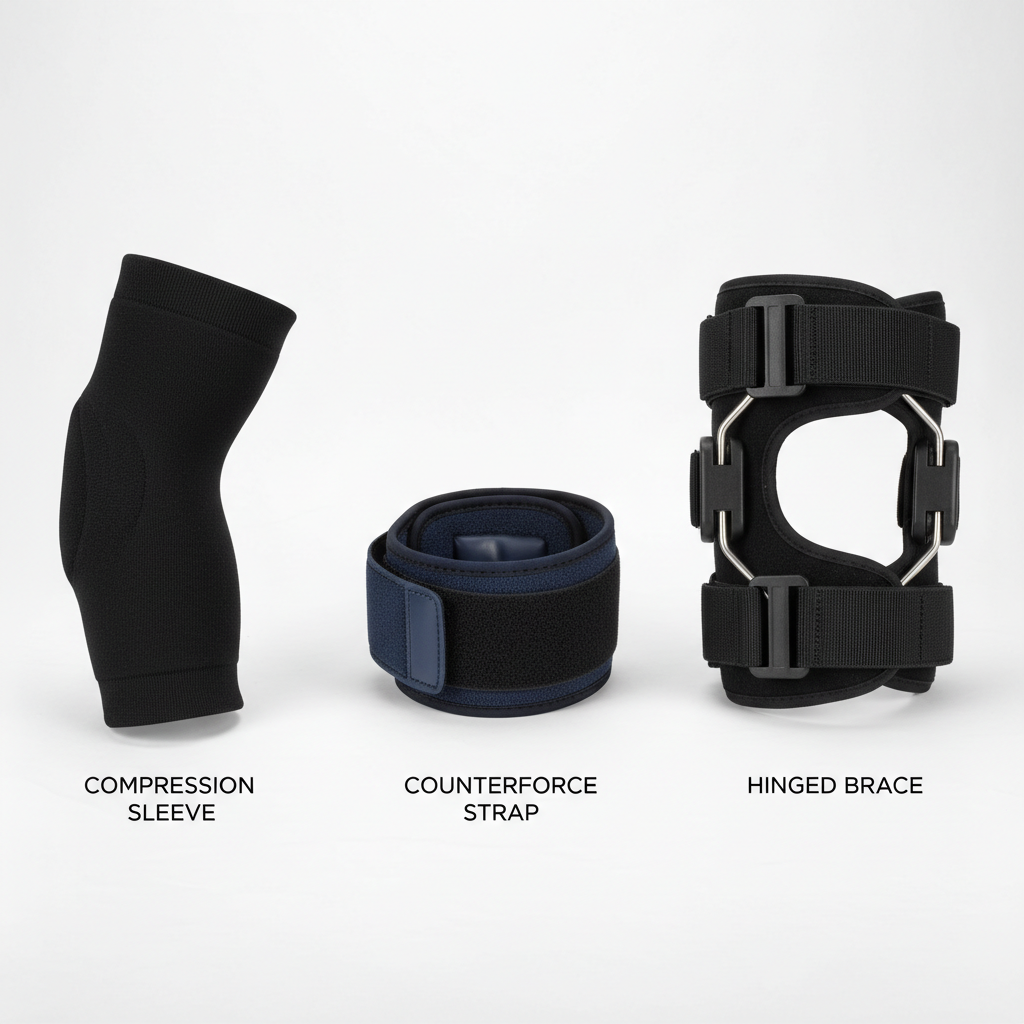
Compression sleeve (everyday support)
- Best for mild aches, warmth, light swelling, and “I just want it to feel stable” days.
- Often easier under clothing and during desk work.
- Watch-outs: too tight can leave deep marks, increase throbbing, or irritate skin.
Counterforce strap (tendon pain focus)
- Best for tennis elbow or golfer’s elbow patterns when gripping or lifting is the trigger.
- Worn below the painful spot, it aims to reduce load through the irritated tendon.
- Watch-outs: if you crank it down, you may trade tendon pain for forearm numbness.
Hinged/rigid brace (motion control)
- Best when you need to limit extension/flexion after injury, during return-to-play, or with instability.
- Often bulkier but can feel more “secure” for higher-risk activity.
- Watch-outs: over-restricting can make you stiff and overly dependent if worn nonstop.
Self-check: what kind of support do you likely need?
This isn’t a diagnosis, but it usually gets you into the right aisle. If several items fit, start with the least restrictive option that still helps.
- Pain mainly with gripping (coffee mug, dumbbells, handshake) and located on one bony side of elbow → consider a counterforce strap plus activity tweaks.
- Dull ache during long days at a desk or light chores, no sharp “zing” → a compression sleeve may be enough.
- You feel unstable, hesitant to fully extend, or returning after sprain/strain → a hinged brace can be appropriate, often short-term.
- Numbness/tingling into ring/pinky or thumb/index → be cautious; bracing might help, but professional evaluation is smarter than guesswork.
- Night pain, visible swelling, heat, redness → skip “self-fixing” and consider medical advice.
According to the Centers for Disease Control and Prevention (CDC)..., persistent or worsening symptoms, or symptoms that limit daily function, are good reasons to seek healthcare guidance rather than relying only on self-care.
Fit and comfort: the details that decide whether it works
Two people can buy the same Elbow Brace and get opposite results because of fit. Comfort is not a luxury feature here, it’s part of the function.
| What to check | Good sign | Red flag |
|---|---|---|
| Compression level | Snug, supportive, no throbbing | Pins-and-needles, color change in hand |
| Edge seams | Flat, doesn’t dig in when bending | Creates a “wire” line that hurts after 20 minutes |
| Slip/roll | Stays put during light sweat | Rolls into crease, bunches, or slides down forearm |
| Skin tolerance | No itching, breathable feel | Rash, hot spots, blisters, strong latex sensitivity |
Small but practical tip: if sizing lands between two options, many people do better sizing up for sleeves (comfort) and sizing precisely for straps (placement matters). Brand sizing varies, so measuring circumference often beats guessing.
How to wear it: placement and timing that actually help
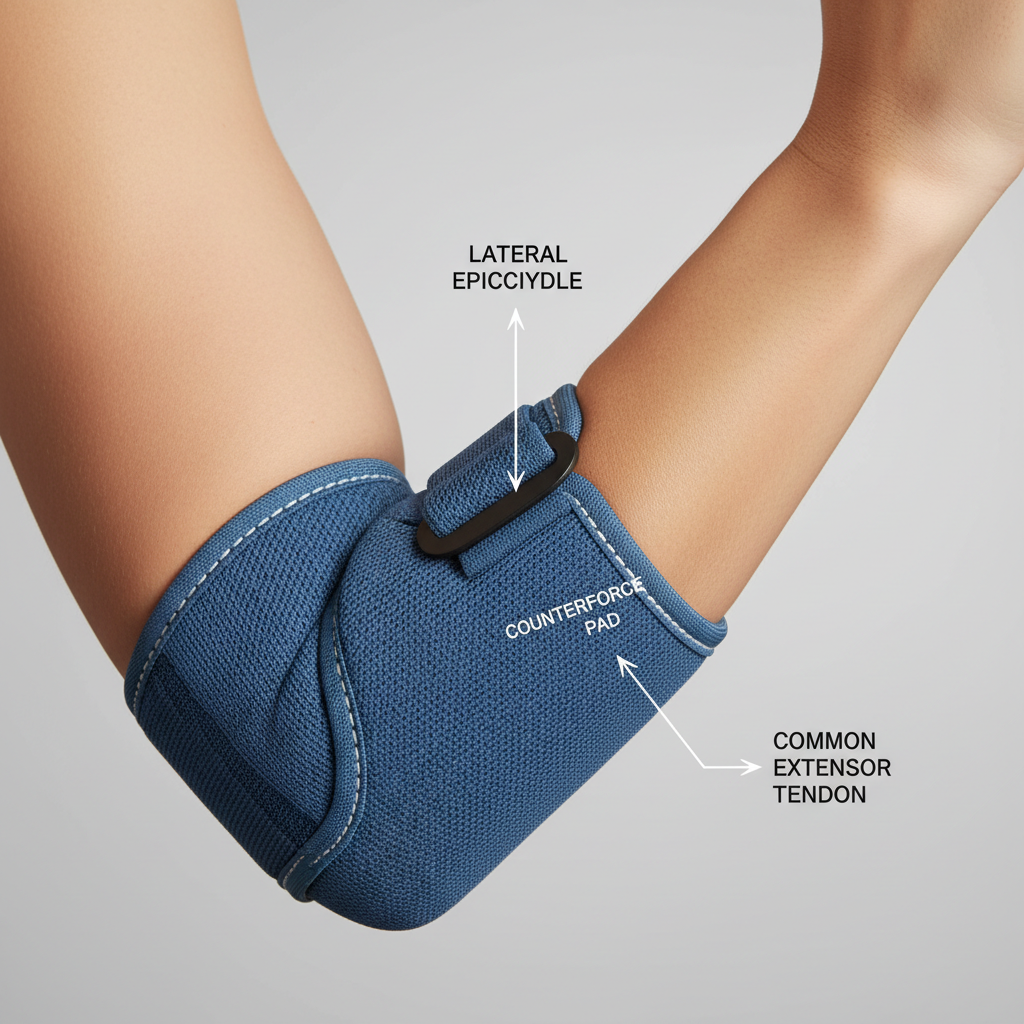
Wearing a brace “somewhere on the elbow” is the most common mistake. Placement should match the job the brace is supposed to do.
Compression sleeve
- Center the knit/gel support over the tender area if the sleeve has a pad.
- Use during the activity that triggers discomfort, then give skin a break.
- If swelling is present, remove and check skin every few hours.
Counterforce strap
- Place it about 1–2 inches below the painful bony point, on the muscular part of the forearm.
- Tighten to “firm,” not tourniquet-tight; you should slide a finger underneath.
- Re-check after 10 minutes of movement, straps often settle.
Hinged or rigid brace
- Align hinges with the elbow joint line so the brace moves with you rather than against you.
- Use for higher-risk tasks, not automatically all day, unless a clinician recommends it.
- Pair with gentle range-of-motion work if stiffness creeps in.
Practical plan: reduce pain without over-relying on the brace
If you want stability and less pain, the brace works best as part of a simple plan. This is the part many people skip because it feels slower, but it’s usually what keeps symptoms from bouncing back.
- Dial down the trigger: reduce grip-heavy volume, switch to neutral grips, use straps for pulling lifts temporarily, or split tasks into shorter blocks.
- Warm up the forearm: 3–5 minutes of light movement and gentle wrist circles before the activity that typically hurts.
- Rebuild capacity: pain-guided strengthening for wrist extensors/flexors and forearm rotation, ideally with a PT plan if symptoms linger.
- Use the brace strategically: wear it for the task, remove it for rest and easy range-of-motion, keep skin happy.
Key takeaways you can apply today:
- If pain is tendon-driven, straps often feel more “specific” than sleeves.
- If you need confidence and motion control, a hinged option is more appropriate than extra-tight compression.
- If you feel numbness or your hand changes color, loosen or stop and consider medical advice.
Common mistakes and when to get professional help
The most common failure pattern is chasing more support when the real problem is technique, workload, or fit. More rigid is not always better, it can just move stress somewhere else.
- Over-tightening: can irritate nerves or reduce circulation, especially with straps.
- Wrong placement: a strap placed on the elbow joint line usually disappoints.
- All-day wear: for many people this creates stiffness and skin irritation, and it can mask warning signs.
- Ignoring training form: death-gripping, wrist-bent lifting, and sudden volume jumps often keep the cycle going.
Consider seeking professional help (sports medicine clinician, physical therapist, or your primary care provider) if pain persists beyond a couple weeks despite rest and smarter loading, if you cannot lift light objects without sharp pain, or if symptoms include numbness, weakness, or significant swelling. According to the National Institutes of Health (NIH)..., persistent pain or neurologic symptoms are common reasons to get evaluated rather than self-treating indefinitely.
Conclusion: An Elbow Brace can be a solid tool for pain and stability, but the “right” brace is the one that matches your symptom pattern, fits comfortably, and supports a sensible plan to reduce the trigger and rebuild strength. If you’re unsure, start with the least restrictive option that helps, and use comfort and function, not hype, as your decision filter.
If you want one action step, measure your arm, pick the brace type based on your main trigger, then test it during the exact activity that usually causes pain, you’ll know quickly whether it’s a keeper.
FAQ
What’s the best elbow brace for tennis elbow pain?
Many people prefer a counterforce strap because it targets the tendon load during gripping, but a sleeve can still help if symptoms are mild or you want all-day comfort. If pain is sharp or worsening, consider professional guidance.
Should an elbow brace be tight?
Snug is the goal, not “as tight as possible.” If you notice tingling, cold fingers, or deep grooves that last, it’s likely too tight and may cause more irritation than relief.
Can I sleep wearing an elbow brace?
Sometimes people do for short periods, especially for comfort, but it can increase stiffness or skin issues. If night pain is frequent, it’s worth checking in with a clinician to understand why it’s happening.
How long should I wear an elbow brace each day?
Often it makes sense to wear it during the activity that triggers pain, then remove it during rest and easy movement. All-day wear can be useful in specific cases, but it’s not automatically better.
Is an elbow sleeve or strap better for lifting weights?
If gripping sets off tendon pain, a strap may feel more effective during pulling and curling movements. If you mainly want warmth and mild stability, a sleeve is usually simpler and less fussy.
Can an elbow brace help with golfer’s elbow?
It can, especially a strap placed below the elbow on the forearm muscles, but results vary depending on what’s driving the irritation. Pairing it with load management and rehab work tends to be more reliable than bracing alone.
When should I stop using an elbow brace and see a doctor?
If symptoms include numbness, weakness, sudden swelling, redness, fever, or pain that keeps worsening, it’s safer to get evaluated. Also consider help if you cannot return to basic daily tasks after a reasonable rest period.
If you’re trying to stay active but keep getting tripped up by elbow pain, a well-fitting brace plus a simple “reduce the trigger, rebuild capacity” plan is often the most practical path. If you’d rather not guess, working with a PT or sports medicine clinic can help you pick the right support level and make sure you’re not bracing over a bigger issue.