
A Workout Plan matters most when you’re new because it removes guesswork, keeps you from doing too much too soon, and makes progress feel predictable instead of random.
A lot of beginners start strong, then stall out for one of two reasons, they either bounce between “whatever looks fun” workouts, or they copy an advanced routine that leaves them sore, frustrated, and skipping days. This guide gives you a weekly structure you can actually repeat.
You’ll get a simple schedule, a few “choose-your-own” options so it fits real life, and the safety notes people usually learn the hard way. If you have an injury, chronic condition, or you’re returning after a long break, it’s smart to check with a qualified health professional before changing activity.
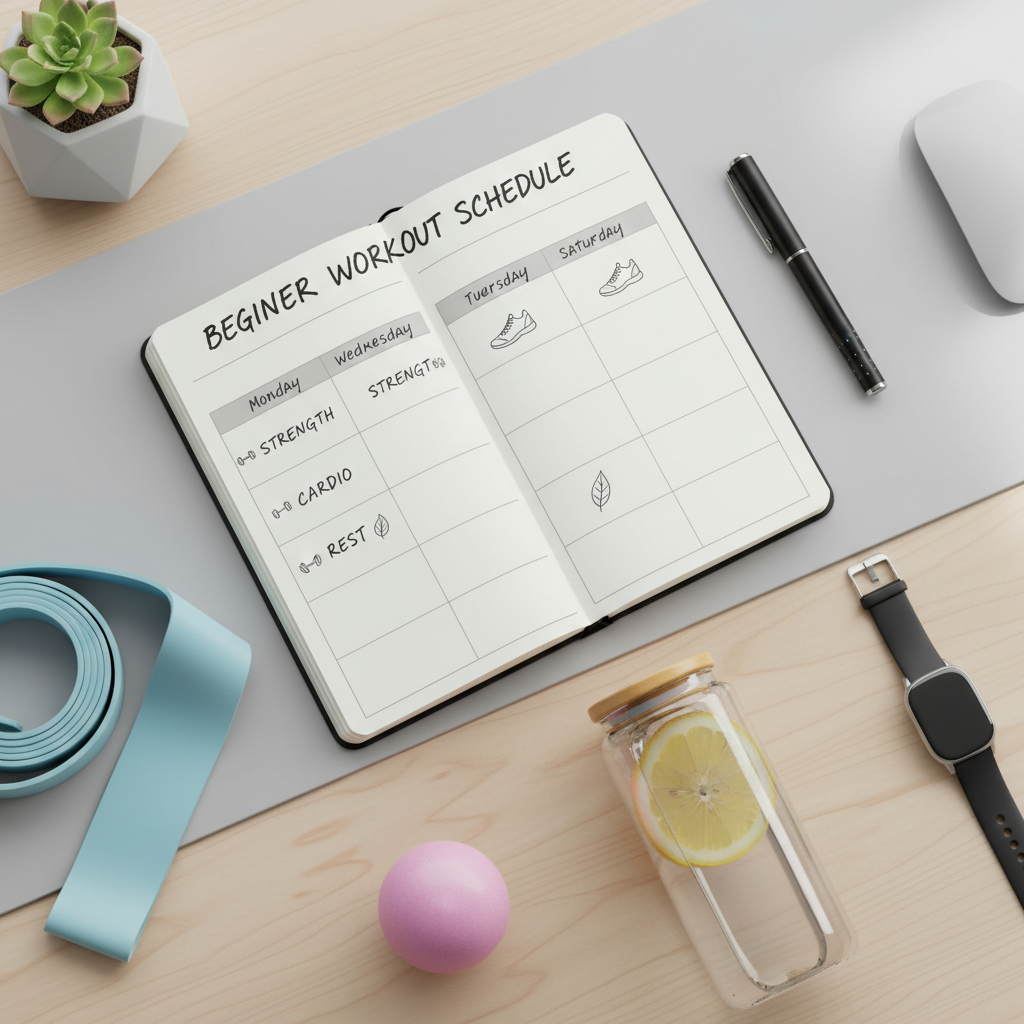
What a beginner Workout Plan should do (and what it should avoid)
Before the schedule, it helps to know what you’re aiming for. A good beginner plan usually does three things, it builds consistency, it teaches basic movement patterns, and it manages fatigue so you recover between sessions.
- Consistency beats intensity, showing up 3–5 days per week is more valuable than crushing one workout then disappearing.
- Simple movement patterns, squat, hinge, push, pull, carry, plus basic core stability.
- Progress that feels boring, small increases over weeks tend to work better than constant novelty.
What to avoid early on, daily high-intensity workouts, maxing out weights, and stacking too many “extras” like sprints, long runs, and heavy lifting in the same week. You can grow into those later.
According to the Centers for Disease Control and Prevention (CDC), adults should aim for a mix of aerobic activity and muscle-strengthening activity across the week, which is exactly the balance this plan targets.
Your weekly schedule at a glance (repeatable for 4–8 weeks)
This template gives you 3 strength days, 2 easy cardio days, and 2 recovery days. If five training days feels like a lot, I’ll show an “adjusted” version right after the table.
| Day | Focus | Time | Effort (RPE) |
|---|---|---|---|
| Mon | Strength A (full body) | 35–50 min | Moderate (6–7/10) |
| Tue | Easy cardio + mobility | 20–40 min | Easy (4–5/10) |
| Wed | Strength B (full body) | 35–50 min | Moderate (6–7/10) |
| Thu | Rest or light walk | 15–30 min | Very easy (2–3/10) |
| Fri | Strength C (full body) | 35–50 min | Moderate (6–7/10) |
| Sat | Cardio (steady) | 25–50 min | Easy-moderate (5–6/10) |
| Sun | Rest + optional stretching | 10–20 min | Very easy (2–3/10) |
RPE means “rate of perceived exertion.” If you can talk in short sentences during cardio, you’re usually in the right zone. If strength sets leave you totally wrecked, it’s too heavy for week one.
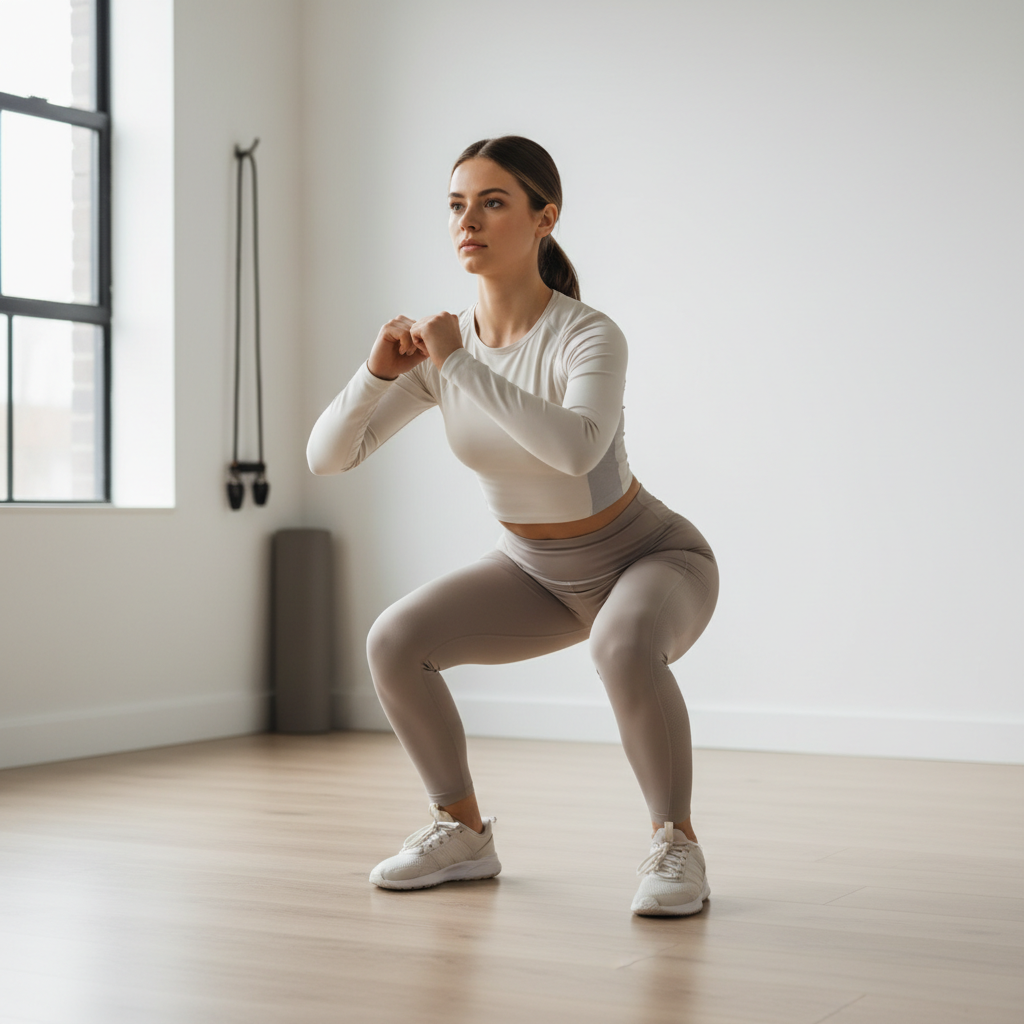
Quick self-check: which version of the plan fits you?
Most people don’t fail because the plan is “bad,” they fail because it doesn’t match their week. Use this quick filter and pick the simplest version you can repeat.
- If you can train 3 days/week, do Strength A, Strength B, Strength C on non-consecutive days, walk on off-days if you want.
- If you can train 4 days/week, do 3 strength days + 1 cardio day (Saturday works well).
- If you can train 5 days/week, follow the full schedule table.
- If soreness knocks you out, keep weights lighter, reduce one set per exercise, and keep cardio easy for two weeks.
- If time is tight, shorten sessions, keep the same exercises, and cut the “extras,” not the basics.
One more honest check, if your sleep is consistently poor or your work stress is heavy, your best Workout Plan usually has fewer hard days, not more.
Strength workouts: A, B, and C (simple, full-body, beginner-friendly)
Each strength day uses the same idea, one squat pattern, one hinge pattern, one push, one pull, then a carry or core move. You can do this at a gym or at home with dumbbells and bands.
How to warm up (5–8 minutes)
- 2–3 minutes easy cardio, brisk walk, bike, or row
- 5 reps each, bodyweight squat, hip hinge, incline push-up
- 10 band pull-aparts or light rows
Warm-ups should make you feel more coordinated, not tired.
Strength A
- Goblet squat: 3 sets of 8–10 reps
- Dumbbell Romanian deadlift (hip hinge): 3 sets of 8–10 reps
- Incline push-up or dumbbell bench: 3 sets of 6–10 reps
- One-arm dumbbell row: 3 sets of 8–12 reps each side
- Farmer carry: 4 walks of 20–40 seconds
Strength B
- Split squat or step-up: 3 sets of 8–10 reps each side
- Glute bridge or hip thrust: 3 sets of 10–12 reps
- Overhead press (dumbbells): 3 sets of 6–10 reps
- Lat pulldown or band pulldown: 3 sets of 8–12 reps
- Dead bug: 3 sets of 6–10 reps each side
Strength C
- Leg press or goblet squat: 3 sets of 8–12 reps
- Kettlebell deadlift or dumbbell hinge: 3 sets of 8–10 reps
- Chest-supported row or cable row: 3 sets of 8–12 reps
- Push-up progression or machine press: 3 sets of 6–10 reps
- Plank: 3 holds of 20–40 seconds
Key point: Stop most sets with about 2 reps left “in the tank.” Form stays clean, your joints feel okay, and you recover faster.
Cardio and recovery days: what “easy” actually means
Beginners often assume cardio has to be miserable to “count.” In practice, easy cardio is what helps your legs recover, improves work capacity, and makes the next strength session feel better.
- Easy cardio options: brisk walking, cycling, swimming, incline treadmill, elliptical
- Time: 20–40 minutes midweek, 25–50 minutes on Saturday
- Talk test: you can speak in full sentences, breathing stays controlled
Recovery day can be a real day off. If you like “doing something,” keep it light, a walk, gentle stretching, or a short mobility flow.
According to the American Council on Exercise (ACE), a balanced program includes cardio, strength training, and flexibility or mobility work, so treat recovery as part of the plan, not a failure to train.

How to progress this Workout Plan (without getting hurt or burning out)
Progress is mostly about tiny upgrades you can repeat. If you jump too fast, your motivation pays the price.
- Week 1–2: learn the movements, choose weights you control, keep RPE around 6–7.
- Week 3–4: add 1–2 reps per set until you hit the top of the rep range.
- Week 5–6: add a small amount of weight, then drop reps back toward the lower end.
- Week 7–8: keep adding reps or small weight bumps, but only if recovery stays solid.
A simple rule that works in many cases, if you hit the top of the rep range on all sets with good form, increase the weight next time by the smallest jump available.
If your joints hurt, not just muscles, pause the progression, reduce range of motion, and consider getting form feedback from a coach or physical therapist.
Common mistakes beginners make (and what to do instead)
- Doing “random” workouts: keep the same 5–7 core moves for a month, track them, then adjust.
- Training hard every day: aim for a couple of challenging sessions, not five exhausting ones.
- Skipping warm-ups: do a short warm-up that matches the lifts you’re about to do.
- Chasing soreness: soreness is a side effect, not a scorecard, focus on steady performance.
- Ignoring recovery: sleep, hydration, and basic protein intake often decide whether this plan feels good or miserable.
Also, don’t underestimate logistics. If your Workout Plan requires perfect timing, a perfect gym, and perfect energy, it won’t survive a normal week.
Practical setup: equipment, timing, and a beginner-friendly checklist
You don’t need a fancy setup. You do need consistency and a way to make choices quickly when you’re tired.
Basic equipment options
- Gym: dumbbells, cable row or lat pulldown, leg press, treadmill or bike
- Home: adjustable dumbbells, a long resistance band, a bench or sturdy chair, a yoga mat
Session checklist (save this)
- Pick today’s template (A, B, or C) before you arrive
- Warm up 5–8 minutes
- Do the 5 main movements, keep rest 60–120 seconds
- Write down weights and reps, notes can be one line
- Finish with a 2-minute cool-down walk if you feel tight
Key takeaways
- 3 strength days form the backbone, cardio supports it, rest keeps it sustainable.
- Start easier than you think, then progress in small steps.
- Track a few basics, exercises, sets, reps, and how hard it felt.
Conclusion: keep it simple, then earn the right to do more
If you stick with this beginner schedule for 4–8 weeks, you’ll usually notice the biggest wins where it counts, workouts feel less intimidating, your strength numbers move up, and your energy becomes more predictable.
Your next step is straightforward, pick the 3-day or 5-day version, put the sessions on your calendar, and run the plan for two weeks before you judge it. If something consistently hurts or recovery keeps falling apart, that’s your cue to scale back and consider professional guidance.
FAQ
- What is the best Workout Plan for a complete beginner?
Usually it’s the one you can repeat for at least a month, with 3 full-body strength sessions and a couple of easy cardio days, rather than a highly advanced split. - Should beginners lift weights or do cardio first?
Many people do well starting with strength training as the anchor, then adding cardio at an easy pace, but if your main goal is general health, either order can work. - How long should a beginner workout be?
In many cases, 35–50 minutes for strength and 20–40 minutes for easy cardio is plenty, longer sessions are not automatically better. - How do I choose the right weight?
Pick a load you can lift with good form while stopping with about 2 reps in reserve; if you’re grinding or losing technique, it’s too heavy for now. - Is it normal to be sore after starting?
Some soreness is common, especially in week one, but sharp pain, joint pain, or swelling isn’t something to push through, consider adjusting or getting checked. - Can I do this plan at home with no machines?
Yes, swap machines for dumbbells and bands, for example band pulldowns for lat pulldowns, split squats for leg press, and carries with loaded bags or dumbbells. - When should I change my routine?
Typically after 4–8 weeks, or sooner if you can’t recover, keep dreading sessions, or you’ve outgrown the rep ranges and can progress no matter what you do.
If you’re trying to build a Workout Plan around a busy schedule, limited equipment, or specific constraints like knee discomfort, a short consultation with a qualified trainer can help you make safer swaps and progress with less trial-and-error.