
Core strength training often gets treated like “do more crunches,” but most people want something more practical: better posture, steadier lifts, fewer back flare-ups, and a midsection that actually supports daily life.
If you’ve tried random ab workouts and still feel wobbly during squats, stiff after sitting, or unsure what “engage your core” even means, you’re not alone. A strong core is less about visible abs and more about control, breathing, and resisting movement when your body wants to collapse.

This guide breaks down what to train (and why), how to choose the right exercises, and a straightforward plan you can repeat. You’ll also get form cues, regressions, and “stop doing this” notes that save time and frustration.
What “core strength” actually means (and why planks aren’t the whole story)
Your core includes more than the front of your stomach. Think of it as a 360-degree support system: abdominal wall, deeper stabilizers, back muscles, glutes, and the diaphragm working with your breathing.
In the real world, your core mostly does one job: transfer force and keep your spine in a safer position while you move, carry, twist, or land. That means a great core session usually includes exercises that resist motion, not just create it.
According to the American Council on Exercise (ACE), many effective core moves emphasize stabilization and proper spinal alignment rather than repeated spine flexion.
Quick self-check: which core problem do you actually have?
Before you add more volume, it helps to name the bottleneck. Use this quick scan and pick the matching exercise category.
- Low back takes over during abs work: you likely need better bracing and anti-extension work (dead bug, plank progressions).
- Hips sway or rotate when you walk/run: anti-rotation and glute support matter (Pallof press, side plank variations).
- You can plank “forever” but feel weak under load: you may need loaded carries and progressive tension (farmer carry, suitcase carry).
- Neck strain during crunch-style moves: swap to breathing-based bracing and rib control (90/90 breathing, dead bug).
- Posture slumps after desk time: train endurance plus upper-back positioning (front plank + rowing patterns, bird dog).
The best exercises to build core strength (by function)
Below are reliable options for core strength training that show up in many coaching programs because they scale well and teach control. Choose 4–6 per session, then progress slowly.
Anti-extension (stop your lower back from arching)
- Dead Bug: keep ribs down, exhale as the leg extends, low back stays heavy on the floor.
- Front Plank (long-lever if ready): squeeze glutes, gently tuck pelvis, push the floor away.
- Ab Wheel or Stability Ball Rollout (advanced): only if you can keep the same rib and pelvis position.
Anti-rotation (stop twisting when you don’t want to)
- Pallof Press (band or cable): press out, pause 1–2 seconds, no torso turn.
- Bird Dog: reach long, avoid shifting hips, think “quiet spine.”
- Renegade Row (advanced): row without letting your hips swing.
Lateral stability (stop side-bending and hip drop)
- Side Plank: ribs stacked over pelvis, shoulder away from ear.
- Copenhagen Plank (advanced): strong adductors help stabilize the pelvis.
Integrated strength (carry, brace, breathe)
- Farmer Carry: tall posture, slow steps, no leaning.
- Suitcase Carry: weight on one side, resist side-bending.
- Front Rack Carry (advanced): keep ribs down, elbows forward, steady breathing.
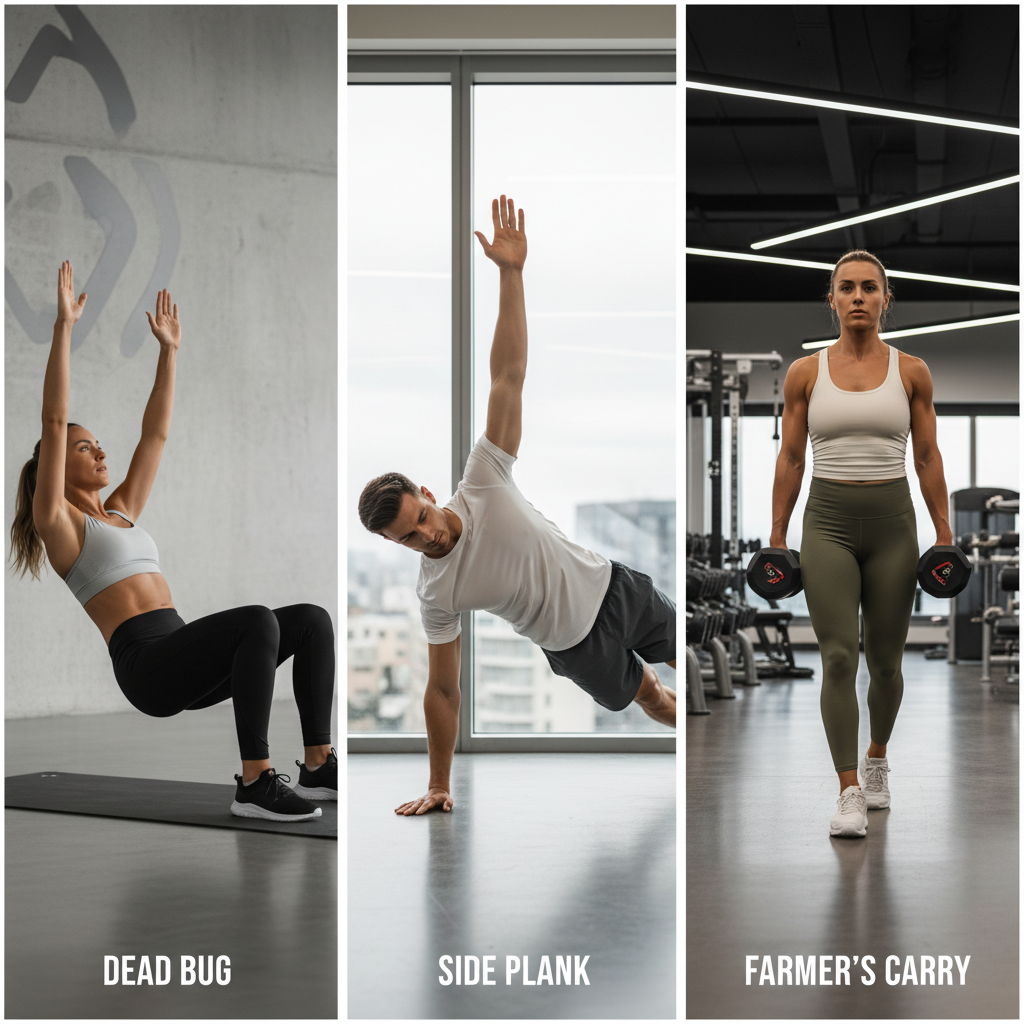
Key point: if an exercise makes you lose rib control, arch your back, or shrug into your neck, it’s not “hardcore,” it’s just the wrong level today.
Form cues that fix 80% of core training problems
Most coaching cues for core strength training boil down to two ideas: ribs over pelvis, and controlled breathing under tension.
- Exhale to set position: a slow exhale helps bring ribs down and reduces lower-back arching.
- Brace like you expect a bump: firm, not maximal, and you can still breathe.
- Own the range: stop the rep before your back, shoulders, or hips compensate.
- Move slow on purpose: tempo exposes weak links faster than adding reps.
According to the National Strength and Conditioning Association (NSCA), correct technique and progressive loading help reduce injury risk and improve training outcomes, especially when stability and bracing are involved.
A simple weekly plan (2–3 days) you can actually stick to
This is the part most people want: what to do, how much, and how to progress without guessing. Use it for 4–6 weeks, then swap variations.
| Day | Focus | Exercises | Sets x Reps/Time |
|---|---|---|---|
| Day A | Anti-extension + carry | Dead Bug, Front Plank, Farmer Carry | 3x6–10/side, 3x20–45s, 4x20–40m |
| Day B | Anti-rotation + lateral | Pallof Press, Side Plank, Bird Dog | 3x8–12/side, 3x20–40s/side, 3x6–10/side |
| Optional Day C | Integrated control | Suitcase Carry, Long-Lever Plank, Light rotation (cable chop) | 4x20–40m/side, 3x15–30s, 2–3x8–10/side |
Progression rule: add time or distance first, then load. If your form breaks, you progressed too fast, not “too weak.”
How to fit core work into your workouts (without overdoing it)
In many programs, core strength training works best as “small but consistent.” A lot of people blow it by doing a massive ab circuit after a heavy leg day, then wondering why their back feels cranky.
- Warm-up: 1–2 activation drills (dead bug breathing, bird dog) for 5 minutes.
- Between sets: short planks or Pallof presses work well during upper-body sessions.
- Finisher: loaded carries are a clean way to end sessions without sloppy reps.
If you lift heavy, keep core volume moderate. The goal is more stability during your main lifts, not destroying your midsection so you can’t brace next session.
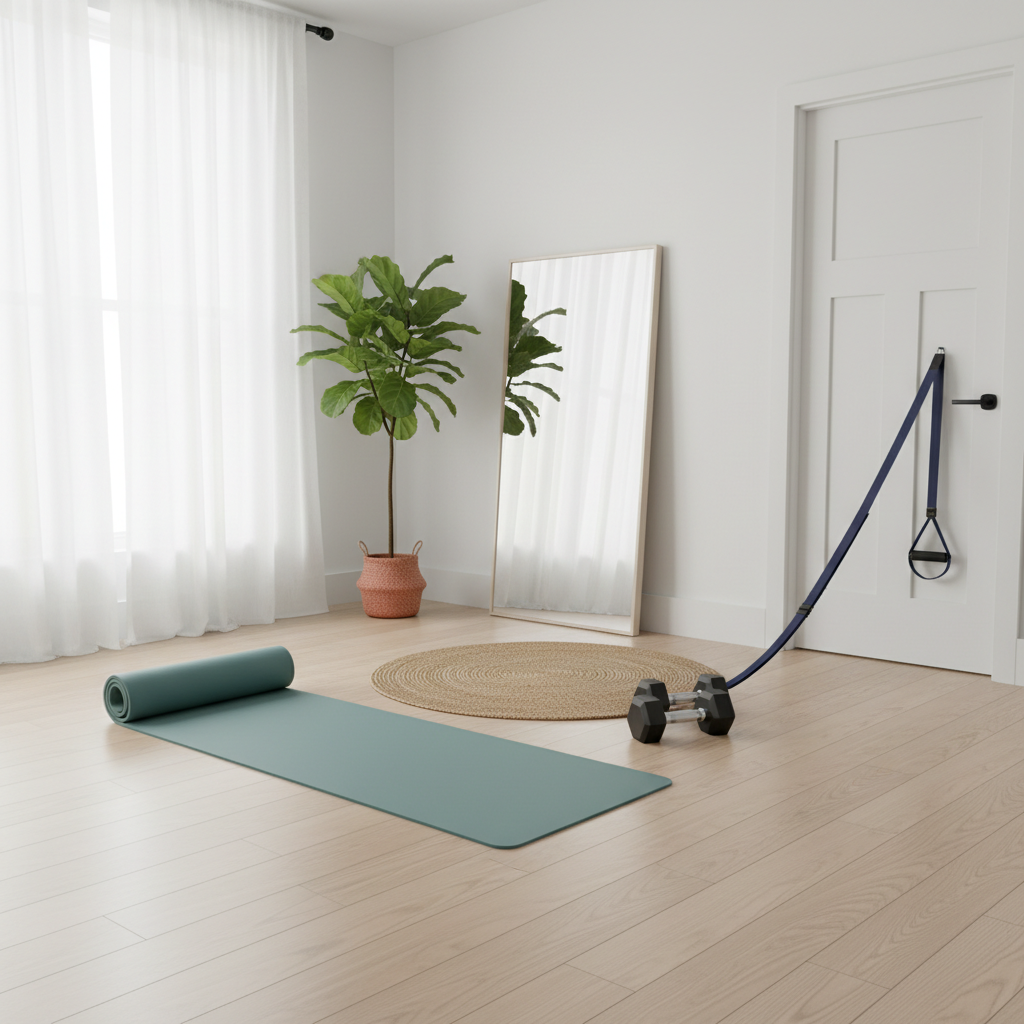
Quick tip for home training: a band, a mat, and one moderate dumbbell can cover anti-rotation, planks, and carries with very little space.
Common mistakes (and what to do instead)
- Mistake: chasing burn with endless crunches.
Try instead: prioritize anti-extension and carries, keep flexion work limited if your back complains. - Mistake: holding your breath the whole set.
Try instead: brace, then take small controlled breaths while staying tight. - Mistake: letting shoulders do the work in planks.
Try instead: push the floor away, keep neck long, ribs down. - Mistake: progressing by adding random new moves weekly.
Try instead: keep the same pattern, add a small amount of time, load, or better form.
When you should pause and ask a professional
Core work should feel challenging, but sharp pain, numbness, or symptoms traveling down the leg are different. If you have ongoing back pain, a history of hernia, recent pregnancy, or you suspect diastasis recti, it’s smart to consult a qualified healthcare professional or physical therapist for individualized guidance.
According to the Centers for Disease Control and Prevention (CDC), choosing appropriate intensity and prioritizing safe technique supports long-term participation in physical activity, especially when health conditions exist.
Conclusion: build the kind of core strength you can use
If you want results you can feel in daily life and in the gym, treat core strength training as skill practice: brace well, resist unwanted motion, and progress gradually. Pick a handful of patterns, repeat them weekly, and let consistency do the heavy lifting.
This week, choose one anti-extension move, one anti-rotation move, one side stability move, and one carry, then train them 2–3 times with clean reps. If it feels almost too simple, you’re probably doing it right.
FAQ
What are the best core strength training exercises for beginners?
Dead bugs, bird dogs, side planks (knees bent if needed), and band Pallof presses are beginner-friendly because they teach bracing without forcing your spine into lots of motion.
How often should I do core strength training each week?
Two to three sessions per week works well for many people. If you also lift, keep sessions short and consistent so your core supports your main training rather than competing with it.
Are sit-ups bad for your back?
They’re not automatically “bad,” but repeated spine flexion can bother some backs, especially if you already feel back tightness. If you notice discomfort, swap to planks, dead bugs, and carries and reassess.
Why do I feel core exercises in my hip flexors?
Hip flexors often take over when rib position and pelvic control slip, or when the exercise level is too aggressive. Shorten the lever, slow the tempo, and focus on a strong exhale before each rep.
Can core strength training help with posture?
It can, especially when paired with habits like regular movement breaks and upper-back strength. A stronger brace helps you hold a better position longer, but posture usually changes through both strength and daily routines.
Should I train core before or after lifting?
Light activation before lifting can help you brace, while heavier core work (like loaded carries) often fits better after. If core fatigue reduces your lifting form, move it to the end.
Do I need equipment for core strength training at home?
Not necessarily. Bodyweight planks, dead bugs, and side planks go a long way. A resistance band adds anti-rotation work, and a single dumbbell makes carries easy to progress.
If you’re trying to put all this into a routine and keep second-guessing exercise choice, a simple next step is to follow a repeatable template for 4–6 weeks, track time/load, and adjust one variable at a time, that approach stays low-stress and usually fits both gym and home setups.