
BMI Calculator results can be a quick reality check when you’re trying to lose weight, gain muscle, or simply understand whether your current weight is in a typical range for your height.
If you’ve ever typed your height and weight into a tool and thought, “Okay… now what?” you’re not alone. BMI is easy to compute, but it’s also easy to misread, especially if you lift, carry more muscle, or have health conditions that affect weight.
This guide walks through what BMI does well, where it falls short, and how to use the number in a way that actually helps your health and fitness decisions, without turning it into a label.
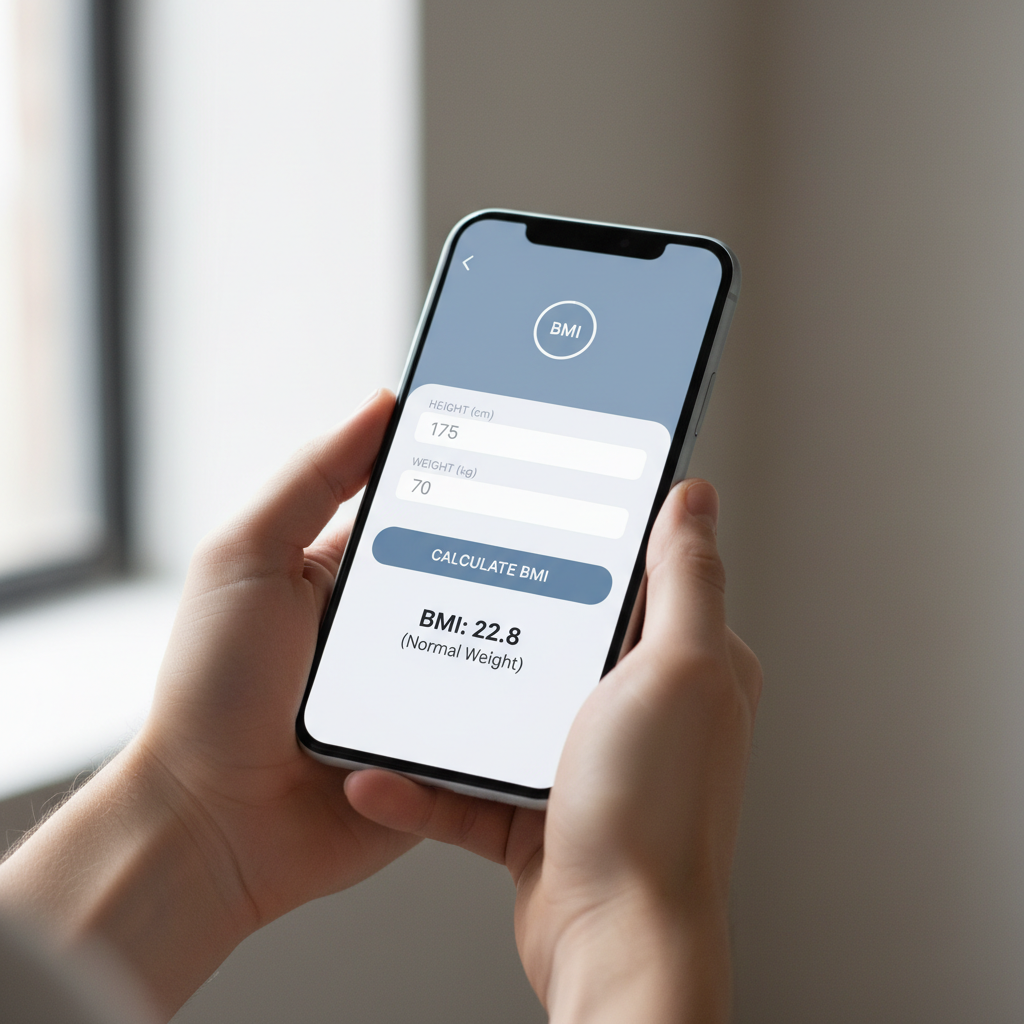
What a BMI Calculator actually measures (and what it doesn’t)
A BMI Calculator uses your height and weight to estimate Body Mass Index, a simple ratio designed for population-level screening. It does not directly measure body fat, muscle, bone density, or where fat sits on your body.
According to the CDC (Centers for Disease Control and Prevention), BMI is a screening tool that can help identify potential weight-related health risk, but it is not a diagnostic measure on its own.
In practice, BMI can be useful for a fast check-in, especially if you track it over time. Where people get burned is treating it as a full-body health report.
Why BMI still shows up everywhere
- Consistency: It’s calculated the same way across clinics, apps, and studies.
- Speed: Two numbers in, one number out, no special equipment.
- Trend value: Changes across months can highlight a direction, even if the absolute number is imperfect.
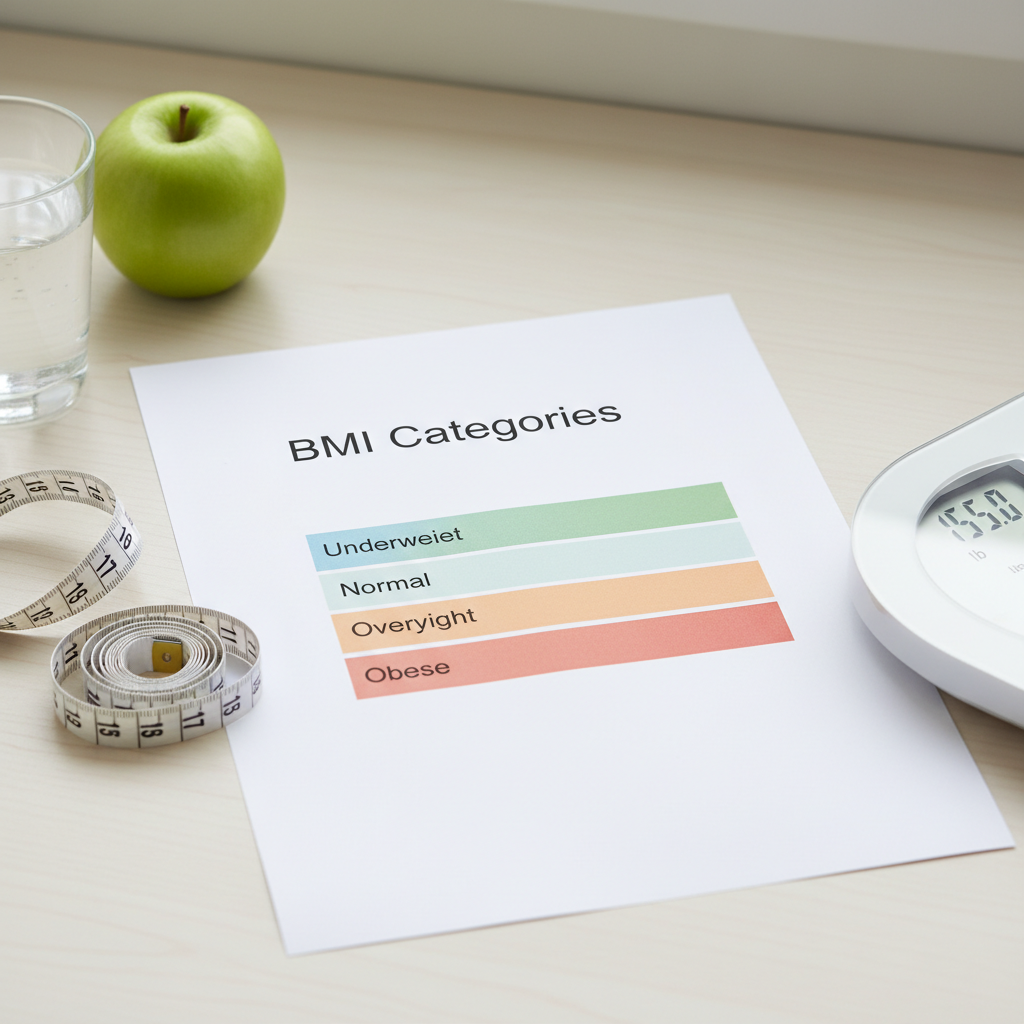
Understanding BMI categories (adult ranges) with a simple table
For most U.S. adults age 20 and up, BMI categories are commonly interpreted using standard cutoffs. Your clinician may still interpret results differently based on medical history, body composition, or ethnicity-related risk factors.
| Category | BMI range (kg/m²) | What it often implies |
|---|---|---|
| Underweight | < 18.5 | May signal low energy reserves or nutrition issues |
| Healthy weight | 18.5–24.9 | Typically associated with lower population-level risk |
| Overweight | 25.0–29.9 | Risk may rise, depending on waist size and health markers |
| Obesity | 30.0+ | Higher likelihood of weight-related conditions for many people |
One practical tip: treat the category as a prompt for the next question, not a final answer. The next question is usually, “Do my other signals line up with this?”
Why your BMI number may feel “wrong” in real life
Some people see a BMI category that doesn’t match how they look, how they perform, or what their labs show. That mismatch is common in a few scenarios.
- You carry more muscle: Strength athletes and regular lifters can land in “overweight” despite low body fat.
- Body fat distribution differs: Abdominal fat tends to correlate with higher risk than fat carried in hips and legs, BMI does not capture this.
- Age changes body composition: Many adults lose muscle over time, so the same BMI can represent different body fat levels.
- Pregnancy or recent postpartum: BMI isn’t meant to judge pregnancy-related weight patterns.
- Certain medical conditions or medications: Thyroid disorders, steroids, and other factors can shift weight without reflecting lifestyle effort.
According to the NIH (National Institutes of Health), BMI is one of multiple measures used to assess weight-related risk, and clinicians often combine it with waist circumference and other health markers.
A quick self-check: how to interpret your BMI result more intelligently
Before you overhaul your diet or training based on a BMI Calculator result, run through a short reality check. You’re looking for context.
- Do you lift or train hard 3+ days/week? If yes, BMI may overestimate fatness.
- Is your waist size trending up? Waist changes often track health risk more closely than weight alone.
- Any recent big life shifts? New job stress, sleep loss, injury, or medication changes matter.
- How do your basics look? Blood pressure, fasting glucose or A1C, lipids, and energy levels add important signal.
- Is the number stable or moving? A slowly rising BMI over a year usually means something different than a one-week fluctuation.
If you only take one thing from this section, make it this: BMI is most useful when paired with trend and context, not when used as a one-time verdict.
How to use BMI for health and fitness goals (practical, not perfect)
A BMI Calculator can still help you set direction, as long as you use it as one input. Below are realistic ways people use BMI without getting stuck in extremes.
If your BMI is in the “overweight” range
- Start with waist and habits: Aim for a modest waist reduction via walking, strength training, and food consistency.
- Choose one nutrition lever: Many people do better picking one change, like protein at each meal or cutting sugary drinks, rather than “dieting harder.”
- Track a 4-week trend: Weight, waist, and workouts together, not just scale weight.
If your BMI is in the “obesity” range
- Make the first goal behavioral: 7,000–10,000 steps for many adults is a realistic range, but your starting point matters more than the target.
- Bias toward strength + low-impact cardio: Joint-friendly options like cycling, incline walking, or swimming can be easier to sustain.
- Consider medical input early: If you have sleep apnea symptoms, high blood pressure, or high blood sugar, it’s worth involving a clinician sooner rather than later.
If your BMI is “healthy” but you feel unfit
- Don’t assume you’re fine: Normal BMI can still come with poor cardio fitness or low muscle mass.
- Use performance metrics: Resting heart rate, walking pace, strength progress, and energy levels can be better goals than weight.

Common mistakes people make with BMI (and how to avoid them)
The number itself is neutral, the trouble comes from how we react to it. These are the patterns that tend to waste time or create stress.
- Using BMI to estimate body fat percentage: It’s not designed for that, so your conclusions can drift quickly.
- Comparing across very different bodies: Two people can share a BMI while having very different muscle and fat distribution.
- Crash dieting to “fix” a category: Fast loss often sacrifices muscle, which can backfire for long-term metabolic health.
- Ignoring measurement errors: Height rounding, shoes, time of day, and scale inconsistency can all skew the result.
- Relying on BMI for kids and teens: Youth BMI is interpreted with age- and sex-specific percentiles, not adult cutoffs.
If you want a more complete picture, pair BMI with at least one other metric you can stick to, like waist circumference, strength progress, or a consistent step count.
When it makes sense to talk to a professional
A BMI Calculator can’t tell you why weight changes happen, or what’s safe for your specific situation. Consider getting help if any of these fit.
- Rapid, unexplained weight change over weeks to months
- Symptoms that suggest sleep or hormone issues such as heavy snoring, persistent fatigue, unusual cold intolerance
- History of eating disorder or current restrictive behaviors
- Chronic conditions like diabetes, heart disease, kidney disease, or pregnancy, where targets may differ
According to the American Heart Association, weight is only one part of cardiovascular risk, and lifestyle, blood pressure, cholesterol, and blood sugar all matter. A registered dietitian or clinician can help connect those dots safely.
Key takeaways you can use today
- BMI works best as a screening and trend tool, not a full diagnosis.
- Context changes everything, especially muscle mass, waist size, and health markers.
- One sustainable habit beats a perfect plan, if you can repeat it for months.
- If the number causes stress or confusion, bring in a professional and use more than one metric.
Conclusion: treat BMI as a compass, not a score
A BMI Calculator can point you toward useful questions, and it can help you notice trends you might otherwise miss. The healthiest approach is to use it alongside real-world signals like waist measurement, strength and cardio fitness, sleep, and lab work when available.
If you want a simple next step, pick one: measure your waist once a week, add two strength sessions, or tighten up one meal pattern you repeat most days. Then reassess your BMI trend in 4–8 weeks, not tomorrow.
FAQ
Is a BMI Calculator accurate for athletes or people who lift weights?
It can be directionally useful, but many lifters show a higher BMI because muscle adds weight. In that case, waist size and body composition measures often give better context.
What is a “good” BMI for men vs. women?
Adult BMI categories use the same cutoffs for men and women. Real-world risk can still vary by individual factors, so clinicians often look at waist size and labs too.
Should I worry if my BMI says “overweight” but my labs are normal?
Not always, but it’s a signal to watch trends. If waist circumference is increasing or fitness is declining, that combination matters more than a single BMI reading.
How often should I check BMI?
For many people, once a month is plenty. If you check daily, normal water swings can make the number feel noisy and discouraging.
Is BMI useful for kids and teens?
Yes, but it’s interpreted differently using age- and sex-specific percentiles. For children, it’s usually best discussed with a pediatrician rather than using adult category charts.
What’s better than BMI for measuring health?
“Better” depends on your goal. Waist circumference, blood pressure, fitness markers, and body fat estimates can add clarity, and a clinician can help choose what fits your situation.
Does BMI predict body fat percentage?
It may correlate in large groups, but it’s not a direct estimate for individuals. Two people with the same BMI can have very different body fat levels.
Need a simpler plan than chasing a number?
If you’re using a BMI Calculator and still feel unsure what to do next, you may do better with a short, personalized checklist that combines BMI trend, waist measurement, and a realistic weekly activity plan, ideally reviewed with a qualified health professional if you have medical concerns.