
Interval Training can be a solid tool for fat loss, but most people struggle because the intervals are either too random, too hard to repeat, or not matched to their fitness level. The result looks like “I did HIIT and I’m exhausted,” without the consistent weekly workload that actually moves the needle.
What makes intervals worth your attention is simple, they let you stack quality effort in less time, and they can keep training interesting enough to stick with. But there’s a catch, fat loss still depends on overall energy balance, recovery, and consistency, not one heroic workout.

This guide breaks down why intervals work, how to choose the right format, how many sessions to do per week, and what to change when progress stalls. You’ll also get a few ready-to-use workouts and a quick self-checklist so you don’t have to guess.
Why interval training helps with fat loss (and where people misread it)
The basic idea is straightforward, you alternate harder effort with easier recovery so you can accumulate more “hard minutes” than you could at a steady pace. Done well, that can increase total calories burned in a workout and make your conditioning improve faster than easy-only training.
According to the American College of Sports Medicine (ACSM), interval-style training can improve cardiorespiratory fitness efficiently, and it often fits into a broader program that supports weight management. That said, “efficient” doesn’t mean “effort replaces strategy.”
- Intervals can raise overall training quality, you spend more time near a challenging intensity without going nonstop.
- They can reduce boredom, which matters more than people admit, adherence drives results.
- They may help preserve performance during a calorie deficit, because you still touch higher intensities.
The common misread is thinking intervals are a fat-loss shortcut. If your nutrition, sleep, and weekly activity are inconsistent, interval sessions often become “stress workouts” that spike appetite, disrupt recovery, and stall progress.
Pick the right interval style: HIIT vs moderate intervals vs sprint intervals
Not all interval training is the same, and choosing the wrong style is a fast way to burn out. In real life, the “best” approach usually matches your current conditioning, joint tolerance, and schedule.

Here’s a practical comparison you can use before you commit.
| Interval style | What it feels like | Good fit if you… | Watch-outs |
|---|---|---|---|
| Moderate intervals | “Hard but controllable,” you can repeat reps | Want fat loss + consistency, newer to structured training | Too easy becomes a jog, too hard becomes HIIT by accident |
| HIIT | Very challenging, breathing heavy, short work bouts | Have a base of fitness, limited time, recover well | Easy to overdo, can increase soreness and hunger |
| Sprint intervals | Near-all-out efforts, long recovery needed | Sport background, strong joints/tendons, excellent warm-up habits | Higher injury risk, not a “fat loss starter plan” |
If you’re unsure, start with moderate intervals. They’re less dramatic, but they’re repeatable, and repeatable beats exciting.
A quick self-check: are you ready for more interval training?
This is the part many people skip. If you’re already drained, adding harder sessions often backfires. Use this short checklist as a reality check.
- You recover within 24–48 hours from most workouts, soreness exists but doesn’t wreck your week.
- Your sleep is stable most nights, and caffeine is not the only thing keeping you functional.
- You can do steady cardio at an easy pace for 20–30 minutes without it feeling like a survival event.
- No unresolved pain in knees, hips, Achilles, or low back that flares when intensity rises.
- Your nutrition is not chaotic, you can roughly hit protein and meal timing without “all or nothing” swings.
If two or more items feel shaky, you can still do Interval Training, but a lower-intensity version and fewer sessions per week usually makes more sense.
How to structure interval training for fat loss (simple rules that hold up)
Good programming is mostly boring. You pick a format, run it for a few weeks, and progress one variable at a time. The most common “fat loss interval” mistake is changing everything every workout.
Rule 1: Keep the work interval honest
A useful target is “hard enough that you want the recovery, controlled enough that you can repeat it.” If your first rep is a 10/10 and your fourth rep is a 6/10, that session turns into messy pacing and inconsistent stimulus.
Rule 2: Use a recovery that lets you repeat quality
For many people, 1:1 to 1:2 work-to-rest works well. Example, 45 seconds hard, 45–90 seconds easy. If you need 4 minutes to recover from 20 seconds of work, you’ve probably drifted into sprint territory.
Rule 3: Cap the “hard” volume
For fat loss, more is not automatically better. A common sweet spot is 8–20 total minutes of hard work in a session depending on intensity and fitness. If your form breaks down, you’re past the productive range.
Rule 4: Put intervals on top of an easy base
According to the Centers for Disease Control and Prevention (CDC), adults benefit from regular aerobic activity plus muscle-strengthening work. Intervals can be part of the aerobic bucket, but many people lose fat faster when they also keep daily steps and easy cardio consistent.
3 interval workouts you can use this week (treadmill, bike, no equipment)
Pick one workout, do it consistently for 2–3 weeks, then adjust slightly. That’s how you get signal instead of noise.
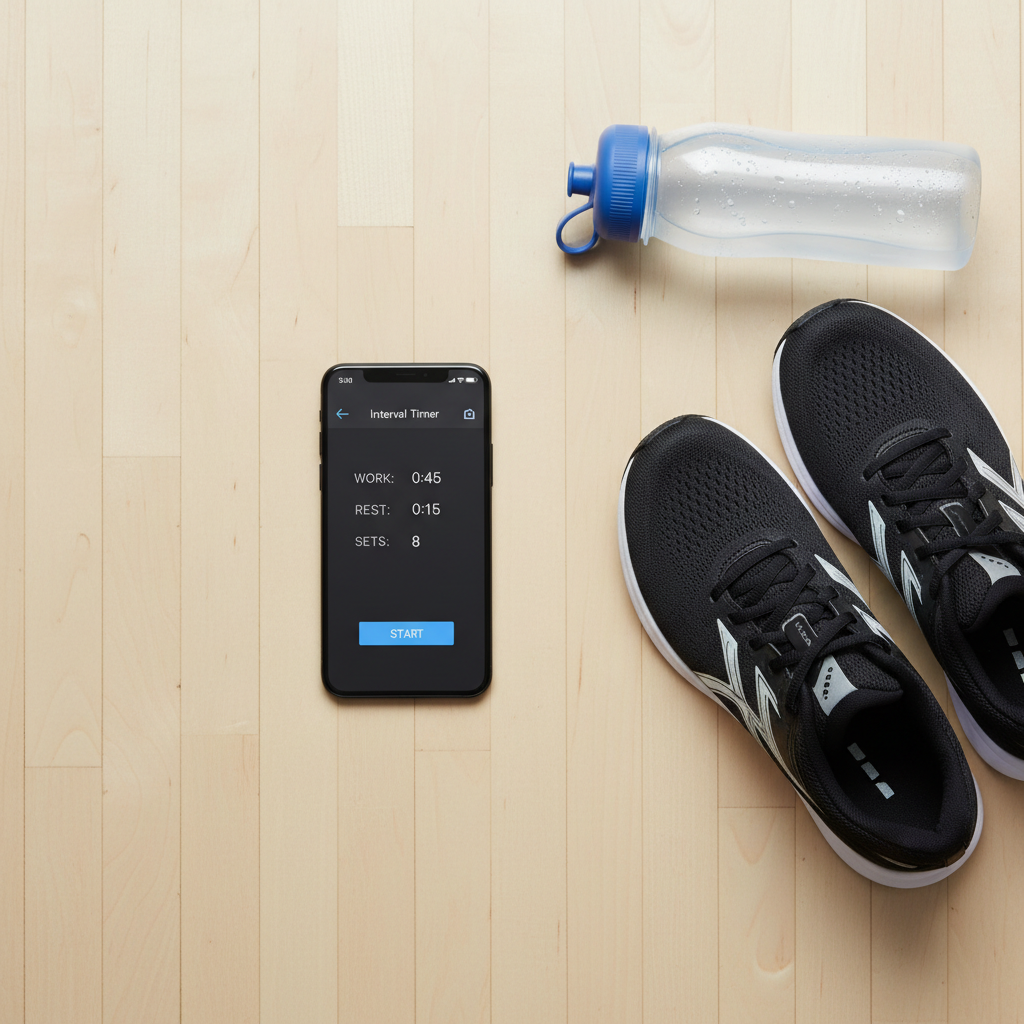
Workout A: Beginner-friendly treadmill intervals
- Warm-up: 6–8 minutes easy walk/jog
- Main set: 10 rounds of 30 seconds hard + 60 seconds easy
- Cool-down: 5 minutes easy
Intensity tip: “Hard” can be a faster walk with incline. You do not need to sprint for this to work.
Workout B: Low-impact bike intervals
- Warm-up: 6–10 minutes easy spin
- Main set: 8 rounds of 45 seconds hard + 75 seconds easy
- Finish: 5–10 minutes easy
This option often works well if running irritates joints, or if you want to push intensity with less impact.
Workout C: No-equipment intervals (apartment-friendly)
- Warm-up: 5 minutes brisk walk + gentle mobility
- Main set: 12 minutes continuous, 20 seconds fast + 40 seconds easy
- Moves: march-in-place fast, step-ups on a stable step, shadow boxing, bodyweight good-mornings
Keep it simple, pick 1–2 moves and repeat. If you rotate ten exercises, intensity turns into choreography.
Make it work in a weekly plan (without wrecking recovery)
For many adults targeting fat loss, 2 interval sessions per week is plenty, especially if you also lift weights. A third session can work, but only if sleep, stress, and soreness are under control.
- 2 days/week intervals + 2–3 days/week strength training + daily steps is a realistic backbone.
- Separate hard days when possible, stacking intervals and heavy leg day often feels tough to recover from.
- Keep easy days easy, if every day feels medium-hard, fatigue builds quietly.
According to the American Heart Association (AHA), mixing intensities across the week supports cardiovascular health. In practice, that usually means one or two harder days, and the rest stays comfortable.
Common mistakes that blunt fat loss (and what to do instead)
Most stalls are not mysterious, they’re pattern-based. Here are the ones that show up a lot.
- Going all-out every session: choose repeatable efforts and track them, the goal is steady progress, not survival.
- Skipping warm-ups: high intensity with cold joints tends to end badly, even a short ramp-up helps.
- Eating back “earned” calories: appetite can rise after hard intervals, plan protein and fiber earlier in the day.
- Ignoring strength training: lifting supports muscle retention during fat loss, and it often improves how you tolerate intervals.
- Measuring success only by sweat: use performance markers like pace, watts, or heart-rate recovery, not just exhaustion.
If you like numbers, pick one metric to track for a month, treadmill pace at a fixed incline, bike watts for a fixed interval length, or how quickly breathing settles during recovery. Keep it boring, that’s the point.
When to get professional help (and how to stay safe)
Intervals are intense by design, so caution is normal. If you have cardiovascular risk factors, recent injury, or chronic pain, it’s smart to talk with a clinician or qualified coach before pushing intensity.
- Stop and seek medical advice if you feel chest pain, faintness, unusual shortness of breath, or palpitations.
- Work with a professional if you keep getting the same flare-ups in knees, Achilles, hips, or low back.
- Consider form coaching if running mechanics look sloppy when fatigue hits, technique tends to be the first thing to collapse.
Many people do better with a moderate interval plan that feels almost “too easy” at first, then progress gradually. That approach might not look impressive on social media, but it’s often the one that sticks.
Conclusion: the simplest way to start and actually keep going
If Interval Training feels confusing, start with two sessions per week, choose moderate intervals, and keep the same workout for 2–3 weeks so your body can adapt. Pair it with steady steps and a reasonable calorie deficit, and you give fat loss multiple chances to happen without betting everything on one brutal workout.
Key takeaways:
- Intervals work best when they’re repeatable, not heroic.
- Moderate intervals are often the most sustainable fat-loss option.
- Two weekly sessions plus strength training and steps is a strong, realistic baseline.
If you want one next step, pick Workout A or B, schedule it twice this week on nonconsecutive days, and write down your interval pace or resistance so next week has a clear target.
FAQ
How often should I do interval training for fat loss?
Most people do well with 2 sessions per week. If recovery is great and you’re not lifting heavily, a third session might work, but it’s usually not necessary.
Is HIIT better than steady cardio for losing body fat?
It depends on what you can repeat consistently. HIIT can be time-efficient, but steady cardio is easier to recover from, and many plans use both to keep weekly volume high without burnout.
What’s the best interval ratio for beginners?
Many beginners respond well to 30 seconds “hard” and 60–90 seconds easy. The quality test is whether you can keep the hard reps fairly consistent across the set.
Should I do interval training fasted in the morning?
Some people tolerate it, others feel shaky and end up underperforming. If intensity drops or you overeat later, try a small carb-plus-protein snack instead, and consider checking with a professional if you have blood sugar concerns.
Why am I gaining weight after starting intervals?
It can be normal to see scale fluctuations from muscle soreness and water retention, especially in the first 1–3 weeks. Increased hunger also sneaks in, so tracking protein and meal structure often helps.
Can I do interval training if I have knee pain?
Maybe, but running-based intervals can aggravate knee issues. Many people switch to cycling, rowing, or incline walking, and it’s wise to consult a clinician or physical therapist if pain persists.
How long should an interval workout be for fat loss?
Often 20–35 minutes total including warm-up and cool-down is enough. Longer sessions can work, but only if intensity stays controlled and recovery remains solid.
If you’re trying to lose fat and want a more hands-off way to set your interval pace, weekly schedule, and progression, a coach or structured plan can help you avoid the common trap of training too hard too often, while still keeping workouts challenging enough to matter.