
Omega 3 Sports is a search phrase that usually shows up when training feels “fine” on paper, but recovery, soreness, or consistency keeps slipping in real life.
Omega-3s (mainly EPA and DHA) are best known for heart and brain support, yet athletes often care about a different question: can they help you show up tomorrow with less stiffness, better movement quality, and fewer “junk” sessions.
This article breaks down what omega-3s can realistically do for sports performance, where the evidence looks more promising, where it stays mixed, and how to use them without turning your supplement stack into a guessing game.

What “Omega-3” means in a sports context
In practice, most performance conversations focus on EPA (eicosapentaenoic acid) and DHA (docosahexaenoic acid), the long-chain omega-3 fats found in fatty fish and many fish oil supplements.
ALA (alpha-linolenic acid) from flax or chia matters for general nutrition, but conversion to EPA/DHA tends to be limited for many people, so it may not deliver the same results for training outcomes.
- EPA: often discussed in relation to inflammation signaling and recovery comfort.
- DHA: structural fat in cell membranes, often discussed in relation to nervous system function.
- Omega-3 index: a blood marker some clinicians use to estimate long-term EPA/DHA status.
According to NIH Office of Dietary Supplements, omega-3s are essential fats, and common dietary sources include fish, seafood, and certain fortified foods, while supplements vary widely in EPA/DHA content.
How omega-3s may support training (and where expectations go wrong)
The most realistic “win” for Omega 3 Sports use is often training continuity. Not a magic boost in VO2 max overnight, but the slow, boring advantage of recovering well enough to keep your week intact.
Areas that may matter to athletes
- Muscle soreness and comfort: some studies suggest omega-3 intake may help certain people feel less sore after hard sessions, though results vary by training status, dose, and program.
- Recovery quality: omega-3s may support how your body manages the normal training stress response, which can affect how “beat up” you feel.
- Joint stiffness: in people with frequent high-impact training, better baseline comfort can indirectly improve movement quality.
- Cardiometabolic support: helpful in the background, especially if your diet is inconsistent, but it’s not the same as a performance supplement like caffeine.
Common expectation traps
- Thinking one capsule equals results: many products have modest EPA/DHA per serving, and the label “1000 mg fish oil” does not mean 1000 mg EPA+DHA.
- Using it like a pre-workout: omega-3s tend to be a habit supplement, not an acute boost.
- Ignoring the rest of recovery: sleep, total protein, calories, and sensible programming still do most of the heavy lifting.
Quick self-check: are you a good candidate?
If you want a simple filter before spending money, use this checklist. You don’t need to “win” every bullet, but patterns matter.
- You eat fatty fish (salmon, sardines, trout) less than twice per week.
- You feel sore enough that it regularly disrupts the next planned session.
- You do high volume or high impact training blocks (marathon prep, CrossFit cycles, heavy strength phases).
- You have a history of inconsistent sleep and want every reasonable recovery lever.
- You dislike fish and realistically won’t change that soon.
On the other hand, if you already eat fatty fish frequently, have stable sleep, and recover well, omega-3s may still support health, but you might not “feel” a difference.
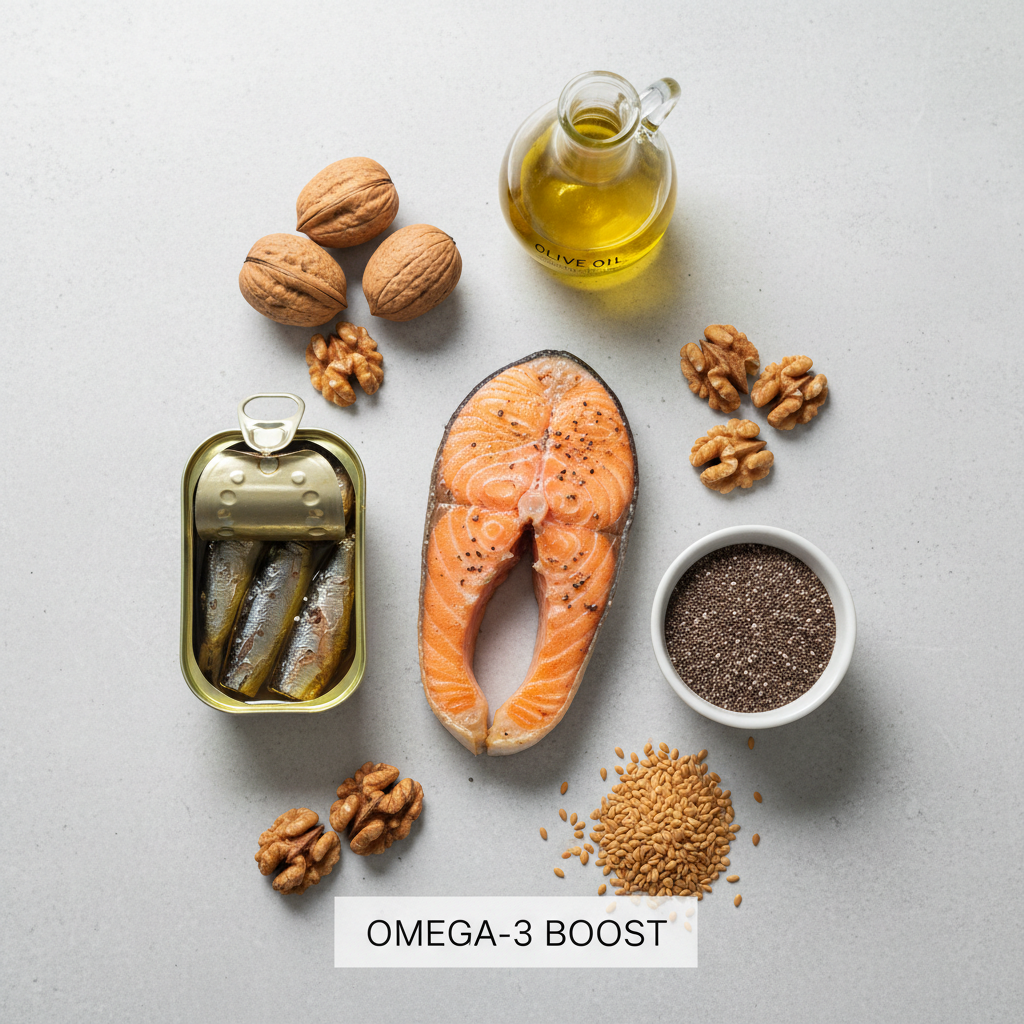
Food vs supplements: what to prioritize
Food first is not a slogan, it’s practical. Fish gives you EPA/DHA plus protein, vitamin D (in some fish), selenium, and a real meal that replaces something else.
High-value food options (athlete-friendly)
- Salmon: easy to batch cook for post-training meals.
- Sardines: cheap, high omega-3 density, strong taste though.
- Trout: often underrated, mild flavor.
- Anchovies: useful in sauces if you hate “fishy” texture.
When supplements make sense
- You travel often and meals become random.
- You can’t tolerate fish or you simply won’t eat it.
- You want consistent intake during heavy training blocks.
According to FDA, seafood is a key dietary source of omega-3s, and supplement quality can vary, which is why reading labels carefully and choosing reputable brands matters.
How to choose an omega-3 supplement (without overthinking)
For Omega 3 Sports shoppers, the label matters more than marketing. What you want to find quickly is the amount of EPA + DHA per serving.
Label checklist
- EPA + DHA listed in mg, not just “fish oil 1000 mg.”
- Serving size: sometimes it’s 2 softgels, not 1.
- Form: triglyceride vs ethyl ester can differ in absorption for some people, but in real-world use, total EPA/DHA and consistency usually matter more.
- Third-party testing: look for independent verification when possible, especially if you compete in tested sports.
Practical dosing and timing for training blocks
Most people do better with a simple, repeatable routine than an aggressive protocol. A common approach is aiming for a daily target of combined EPA+DHA, taken with meals for tolerance.
| Scenario | Practical approach | What to watch |
|---|---|---|
| Eat fatty fish 2x/week | Consider supplement only on non-fish days, or use a low daily dose | Don’t double-count intake and assume “more is better” |
| Heavy training block (6–12 weeks) | Use a consistent daily supplement routine, reassess after the block | GI tolerance, budget, and whether soreness actually improves |
| No fish in diet | Supplement daily, consider algae-based options if avoiding fish | EPA/DHA amount per serving, product freshness |
| Joint discomfort affects training | Combine omega-3 routine with load management and technique work | Don’t use supplements to “push through” injury signals |
Timing rarely needs to be sporty. Many people take omega-3s with breakfast and dinner to reduce “fish burps” and stomach upset. If you’re on medications or have a medical condition, it’s smart to check with a clinician first.
According to NIH Office of Dietary Supplements, omega-3 supplements can interact with certain medications and may not be appropriate for everyone, so professional guidance matters in higher-risk situations.

Common mistakes, side effects, and safety notes
Omega-3s are widely used, but “common” does not mean risk-free. Most issues come from dosing too high, ignoring interactions, or buying low-quality products.
Mistakes that waste money
- Choosing by total fish oil mg instead of EPA+DHA.
- Inconsistent use and expecting a clear performance change.
- Stacking similar products (fish oil + krill oil + omega blend) without tracking totals.
Side effects people actually notice
- Fishy aftertaste or reflux, often improved by taking with meals or switching brands/forms.
- GI upset, especially when taken on an empty stomach.
Situations to be extra cautious
- Use of blood thinners or bleeding disorders.
- Upcoming surgery or dental procedures.
- Pregnancy, breastfeeding, or managing chronic conditions.
If any of these apply, discuss Omega 3 Sports supplementation with a qualified clinician or sports dietitian, even if your plan feels “standard.”
Action plan: a simple 2-week test athletes can follow
Here’s a low-drama way to see whether omega-3s fit your routine, without pretending you can isolate every variable in a busy life.
- Pick one strategy: either eat fatty fish twice weekly or use a supplement with clearly listed EPA+DHA.
- Keep training steady: avoid adding new workouts that change soreness patterns.
- Track two signals: next-day soreness (0–10) and whether you completed the next planned session.
- Assess honestly: if you feel no difference but you tolerate it well, you can still keep it for general health, just don’t overspend.
Key takeaways you can keep in your notes app: omega-3s tend to help the most when your baseline intake is low, when training stress is high, and when you care more about consistency than “instant PRs.”
Conclusion: where Omega 3 Sports fits in a performance plan
Omega 3 Sports works best as a quiet support tool: it may help recovery comfort and training continuity, but it rarely replaces smart programming, sleep, and adequate protein.
If you want a clean next step, choose one lane, food or supplement, keep it consistent for a few weeks, and judge it by whether you string together better training weeks, not by whether one workout feels superhuman.
FAQ
Is Omega 3 Sports supplementation better for endurance or strength athletes?
It can fit both. Endurance athletes often care about day-to-day recovery and inflammation management, while strength athletes may care about soreness and joint comfort. Your baseline fish intake and training load usually matter more than sport type.
How much EPA and DHA should I look for on a label?
Look for a product that clearly lists EPA and DHA amounts per serving, then decide a daily target that matches your diet and tolerance. If you’re unsure, a sports dietitian can help you set a reasonable range.
Can I just use flax or chia instead of fish oil?
Flax and chia provide ALA, which is healthy, but conversion to EPA/DHA is limited for many people. If your goal is specifically EPA/DHA status for performance-related recovery, you may prefer fish or algae-based EPA/DHA.
Does taking omega-3s before a workout improve performance that day?
Usually no. Omega-3s are not an acute ergogenic aid like caffeine. They’re more about long-term tissue and recovery support, where consistency tends to beat timing tricks.
What’s the difference between fish oil and krill oil for athletes?
Both can deliver EPA/DHA, but the effective dose comes down to the actual EPA+DHA on the label and what you’ll take consistently. Some people prefer one for tolerance, but it’s rarely a game-changer.
Can omega-3s reduce inflammation too much and blunt muscle gains?
This concern comes up a lot. In real training, most people using moderate intake are trying to manage excessive soreness or poor recovery, not eliminate the normal adaptation signal. If you’re pushing very high doses, it’s worth discussing with a professional.
How do I know if my fish oil is “good quality”?
Check for clear EPA/DHA labeling, recent expiration, good storage practices, and ideally third-party testing. If the product tastes strongly rancid or causes persistent GI issues, switch or stop.
If you want a more personalized approach
If you’re trying to decide between food changes, an algae-based option, or a specific EPA/DHA target for a tough training block, a sports dietitian can help you align Omega 3 Sports use with your program, budget, and any medical considerations, without guessing.